


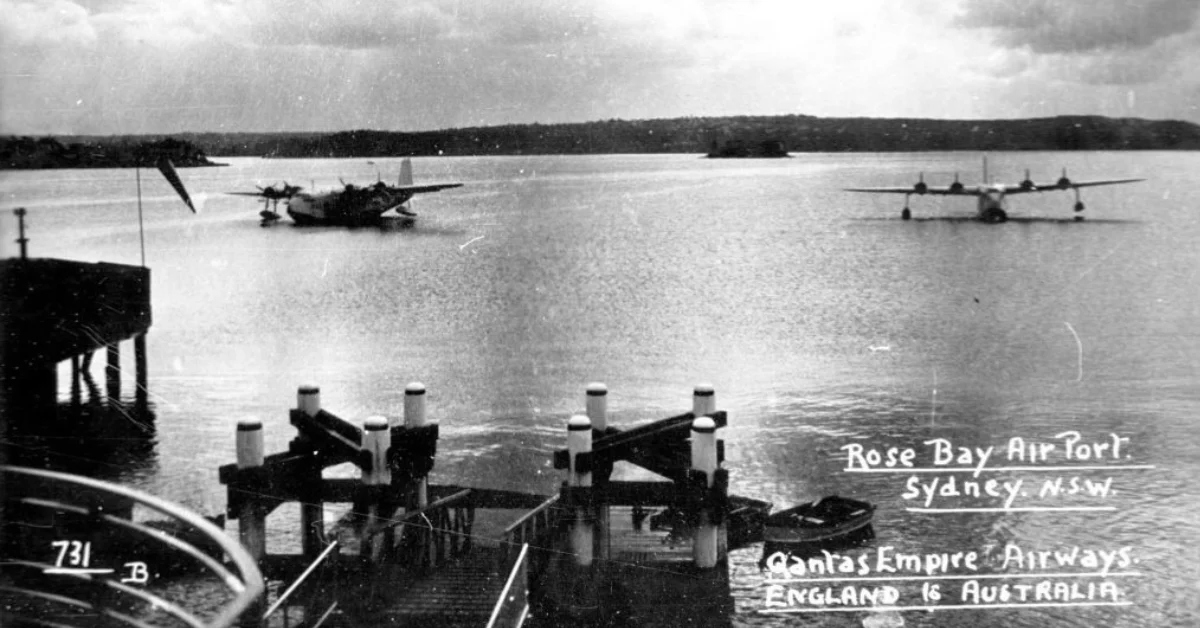
The flying boat hangars that once occupied Rose Bay’s waterfront are long gone, and much of the former airport site has returned to public recreational use. Yet this stretch of Sydney Harbour was once an international aviation gateway, before advances in aircraft technology and the end of a final island route brought regular commercial flying boat operations to a close.
Read: Rose Bay’s Lost International Airport: When Sydney’s London Flights Took 10 Days
Rose Bay Water Airport officially opened on 4 August 1938, becoming Australia’s first international airport. Its closure in 1974 marked the end of 36 years of operations that had connected Sydney with destinations across Australia and overseas.
Today, a surviving historic building and a commemorative plaque offer reminders of the airport that once occupied the foreshore.
How Rose Bay Lost Its International Role
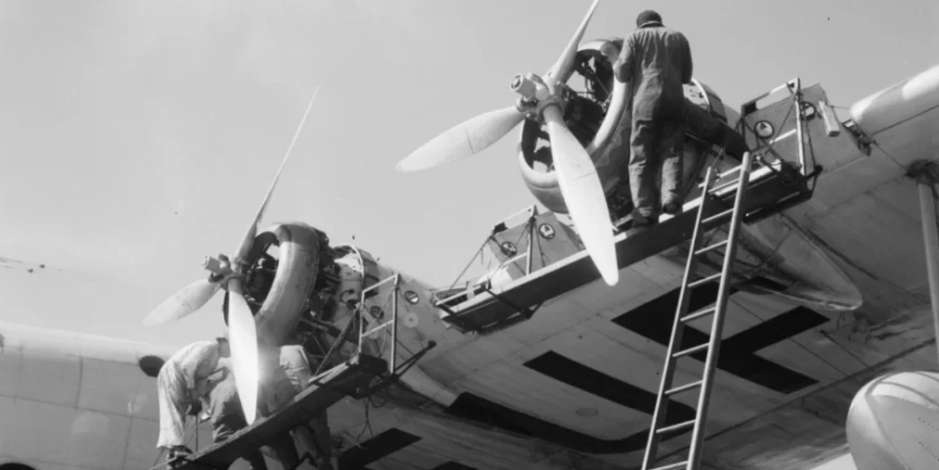
The flying boat base was established at Lyne Park in 1938, serving flights between Sydney and England through an arrangement involving Qantas Empire Airways and Britain’s Imperial Airways. The journey took approximately nine and a half days, considerably shorter than the five weeks required to travel by ship.


Air mail provided the financial foundation for the service, while passenger flights offered an expensive alternative to sea travel. However, international operations were interrupted when commercial services were suspended in 1942 during World War II.
The base came under defence control and was expanded to accommodate military flying boats and seaplanes. Aircraft were used to transport personnel, cargo and mail in support of wartime operations.
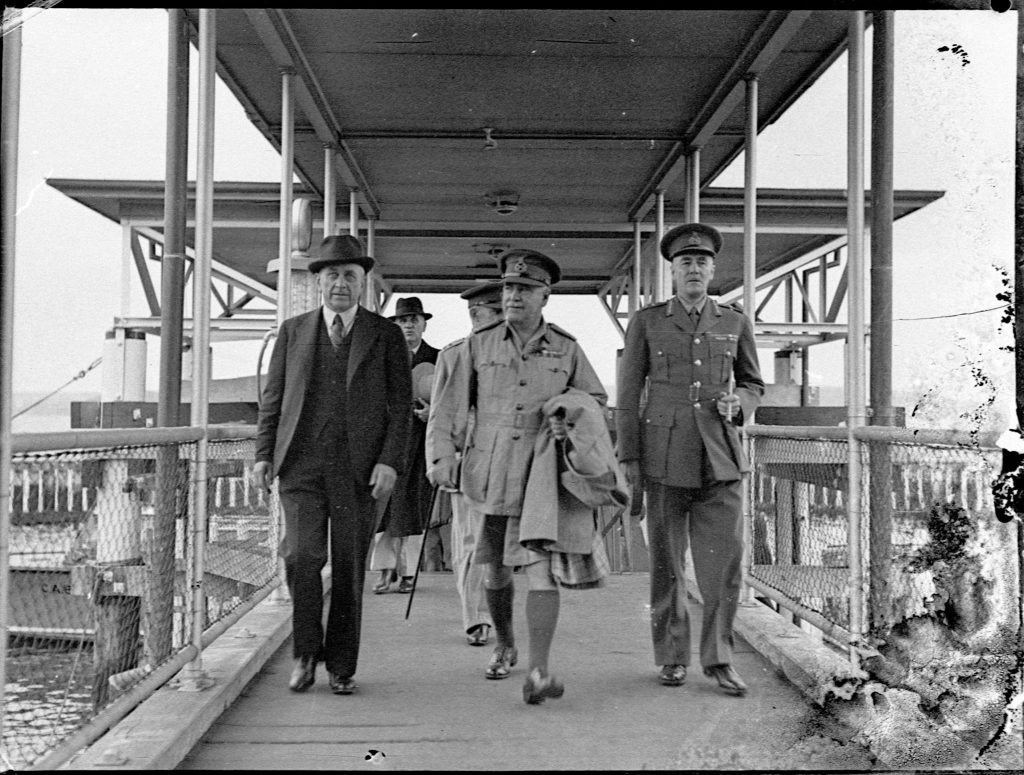
Commercial operations resumed after the war, but the aviation industry was changing. Major airports had been constructed during the conflict, while improvements in land-based aircraft made conventional runways increasingly important to international travel.
By the 1950s, Mascot had taken over Rose Bay’s role as Sydney’s international aviation gateway. Sydney Airport’s international terminal would later open in 1970, although Rose Bay continued handling other flying boat services.
The growing use of land-based aircraft contributed to the decline of flying boats. In 1955, Qantas discontinued its flying boat operations and sold its aircraft to Ansett Airways.
The Final Flights to Lord Howe Island
Despite losing its international status, Rose Bay remained an active flying boat base through services connecting Sydney with Lord Howe Island.
Ansett continued operating the route while the island lacked a conventional airport. However, the growing use of land-based aircraft reduced the need for flying boat services, and plans to build an airstrip on Lord Howe Island offered an alternative.
Discussions about an island airstrip had taken place for years before construction began in March 1974. Australian Army engineers carried out the project, creating a runway that would allow conventional aircraft to serve the island.
On 10 September 1974, Ansett operated its final scheduled flying boat service between Sydney and Lord Howe Island, ending regular commercial flying boat operations at Rose Bay.
The remaining aircraft did not all leave immediately. One departed Rose Bay on 25 September, while another left Sydney Harbour on 28 November 1974 after preparations for their transfer overseas.
Their departure completed the withdrawal of the flying boats that had kept Rose Bay connected to Lord Howe Island long after its international services had declined.
What Happened to the Airport Buildings?
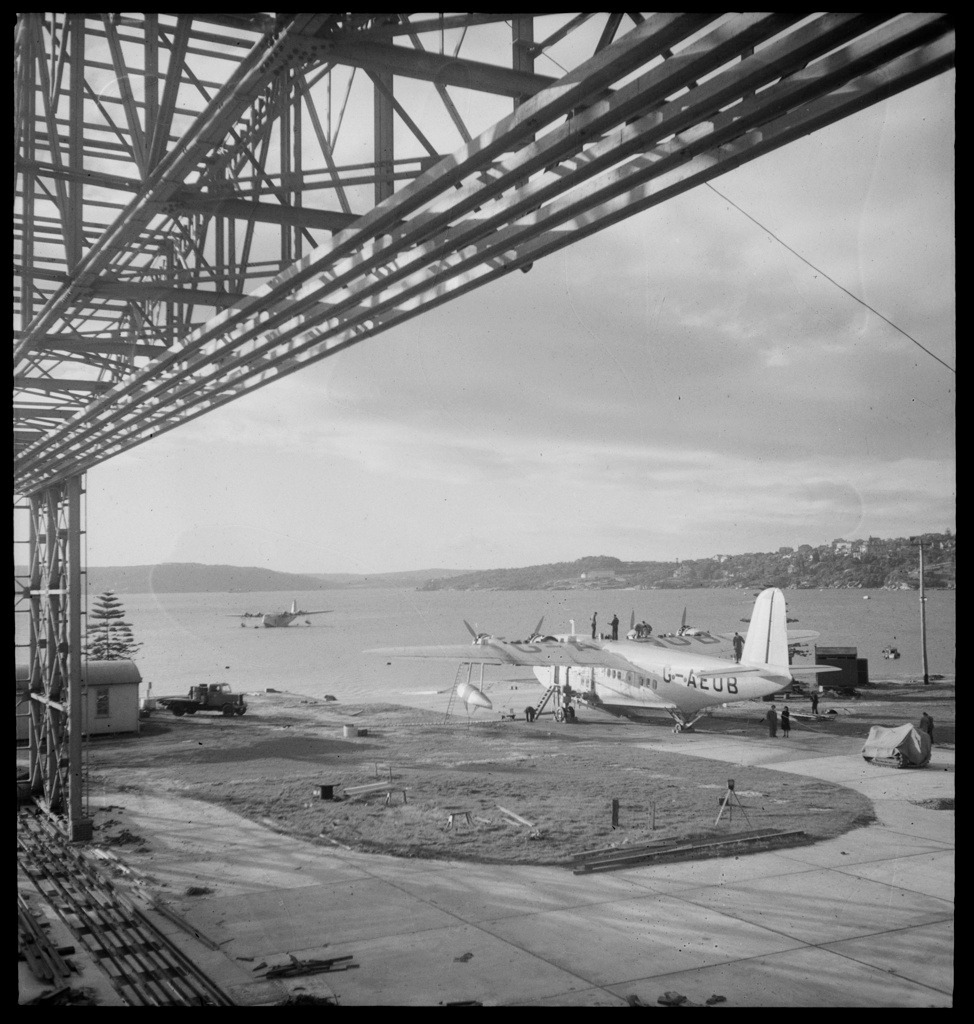
The closure also changed the appearance of Rose Bay’s waterfront. Facilities that once supported the flying boats were progressively removed, and parts of the former airport grounds were returned to public use.
The flying boat hangars were dismantled in 1977, several years after the final scheduled commercial service. The former base area became part of the public parkland around Lyne Park.
One historic structure survives on Vickery Avenue. The Rose Bay Scout Hall, originally built for the Scouting movement, was used by the Royal Australian Air Force during World War II and remains associated with the former flying boat base.
A heritage assessment prepared in 2020 identified the hall as the only substantial surviving above-ground structure associated with the airport. The building was subsequently included on the local heritage list in 2021.
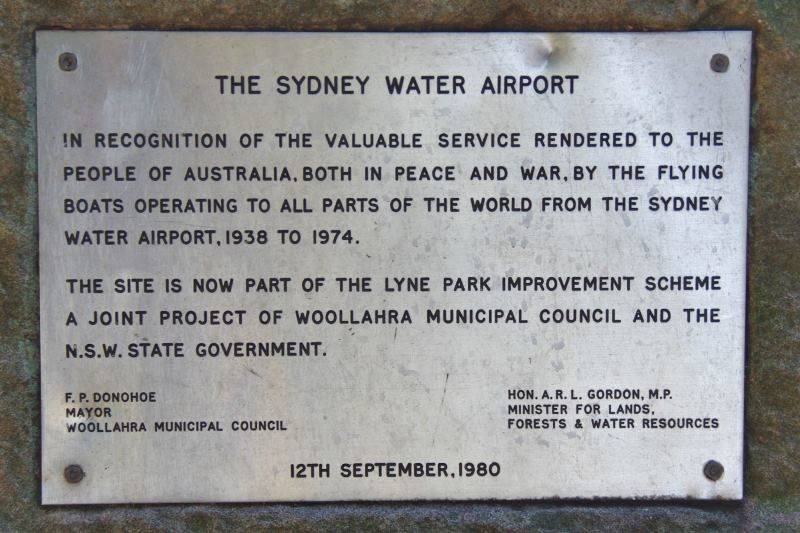
A commemorative plaque at Lyne Park also records the site’s aviation history. Seaplanes have remained part of the waterfront. Sydney Seaplanes continues to operate scenic flights from Rose Bay, although these services are considerably different from the long-distance international routes that once departed from the harbour.
Read: Rose Bay Marina Proposal Refused Over Scenic Character Concerns
The airport’s hangars and regular commercial flying boat services have disappeared, but the Scout hall, plaque and continuing seaplane activity remain visible links to a time when Rose Bay served as Sydney’s gateway to international air travel.
Published 11-October-2026