
Rose Bay Courts Proposal Responds To Growing Demand For Local Netball Space

At Woollahra Oval 2 and 3 in Rose Bay, a proposal for two new netball and basketball courts is being shaped around a familiar local sporting pressure: growing demand for training space, particularly for girls’ sport, in an area where court access remains limited. 


Rose Bay Courts Proposal Centred On Local Sporting Demand

Woollahra Oval 2 and 3 already carries a busy sporting role in Rose Bay, with cricket using the ground in summer and rugby union in winter. The latest proposal for the site does not seek to replace that role, but to add another layer to it through two dual-use courts for netball and basketball.

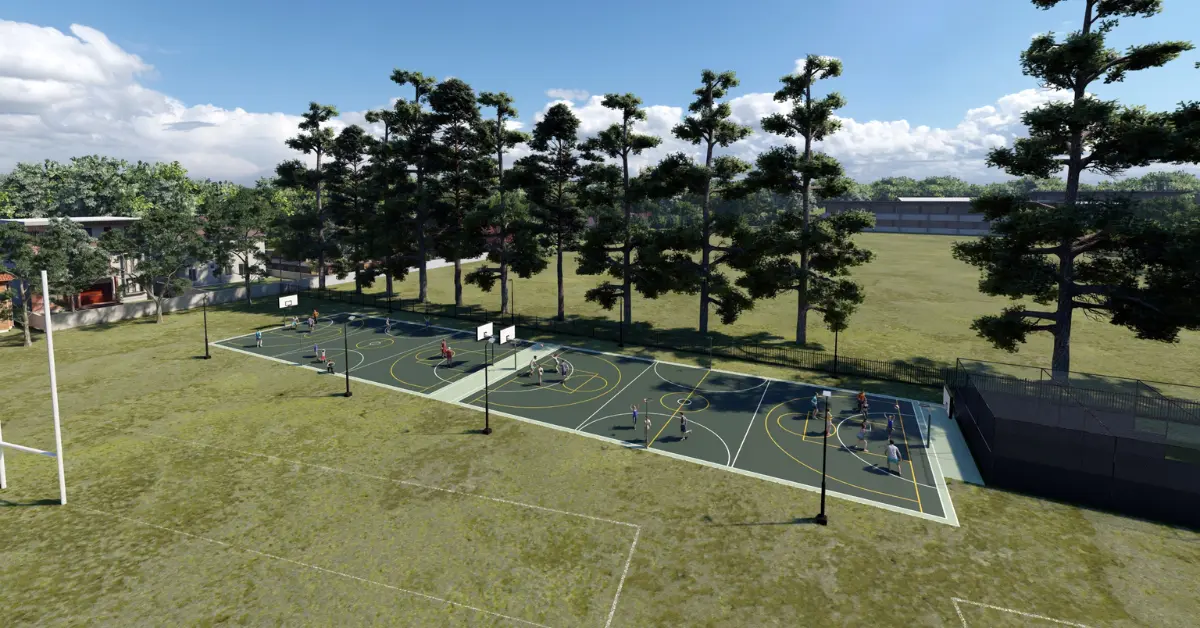
The draft plan would place the courts at the northern end of the oval, creating a hard-surface area line-marked for both sports. Each court would have reversible netball and basketball rings at both ends, while four additional netball rings would be installed along the sides of the courts.

The proposal has been shaped by an identified shortage of netball and basketball courts for training and casual use. That shortage has been linked to the recent growth of girls’ sport in the local area, with feedback from schools, clubs and families pointing to limited nearby space for netball training.

Local netball demand is a key part of the proposal. Existing facilities in the area include two hard-surface netball and basketball courts at Christison Park in Vaucluse and one grass netball court at Lough Playing Fields in Double Bay. The proposed Rose Bay courts would add more training and casual play space without removing cricket or rugby from Woollahra Oval 2 and 3.
Rose Bay proposed court layout
Photo Credit: WoollahraCouncil

New Courts Designed Around An Existing Oval

The proposal would require the three existing cricket practice nets to be shifted about 45 metres east towards Kent Road. The relocated nets would not be lit.

That change is intended to make room for the courts in the northern section of the oval, where the space between the rugby fields and boundary fence narrows from west to east. The layout is designed so the courts can sit within the existing sporting area while current cricket and rugby matches and training continue.

The proposed playing surface would be an acrylic painted coating on a concrete or asphalt base. That surface is already used at the netball and basketball courts at Christison Park in Vaucluse and the basketball court at Lyne Park.

Woollahra Oval 2 and 3 currently includes two rugby playing fields, an artificial grass cricket wicket and three cricket practice nets. Rose Bay Community Garden is also located within the park.
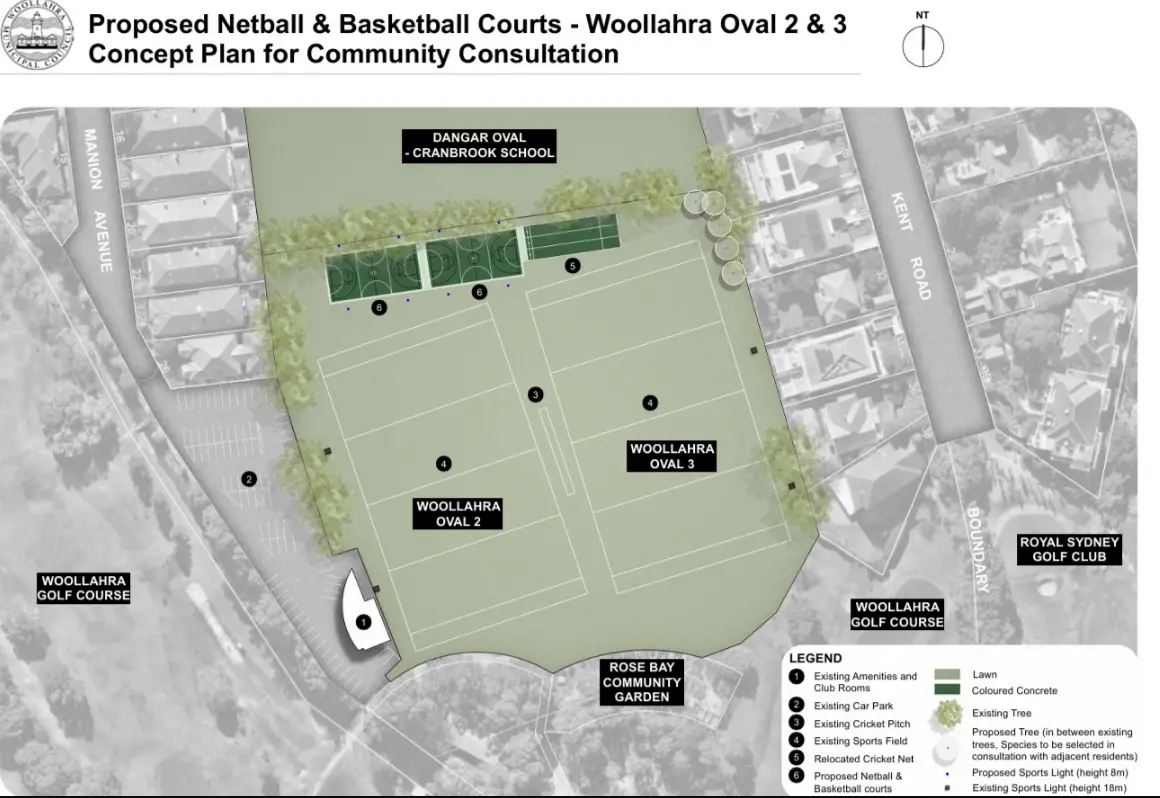
Woollahra Oval sports court plan
Photo Credit: WoollahraCouncil

Lighting Plan Tries To Limit Nearby Impact

The proposal includes sports lighting for the new courts, but not for the relocated cricket nets.

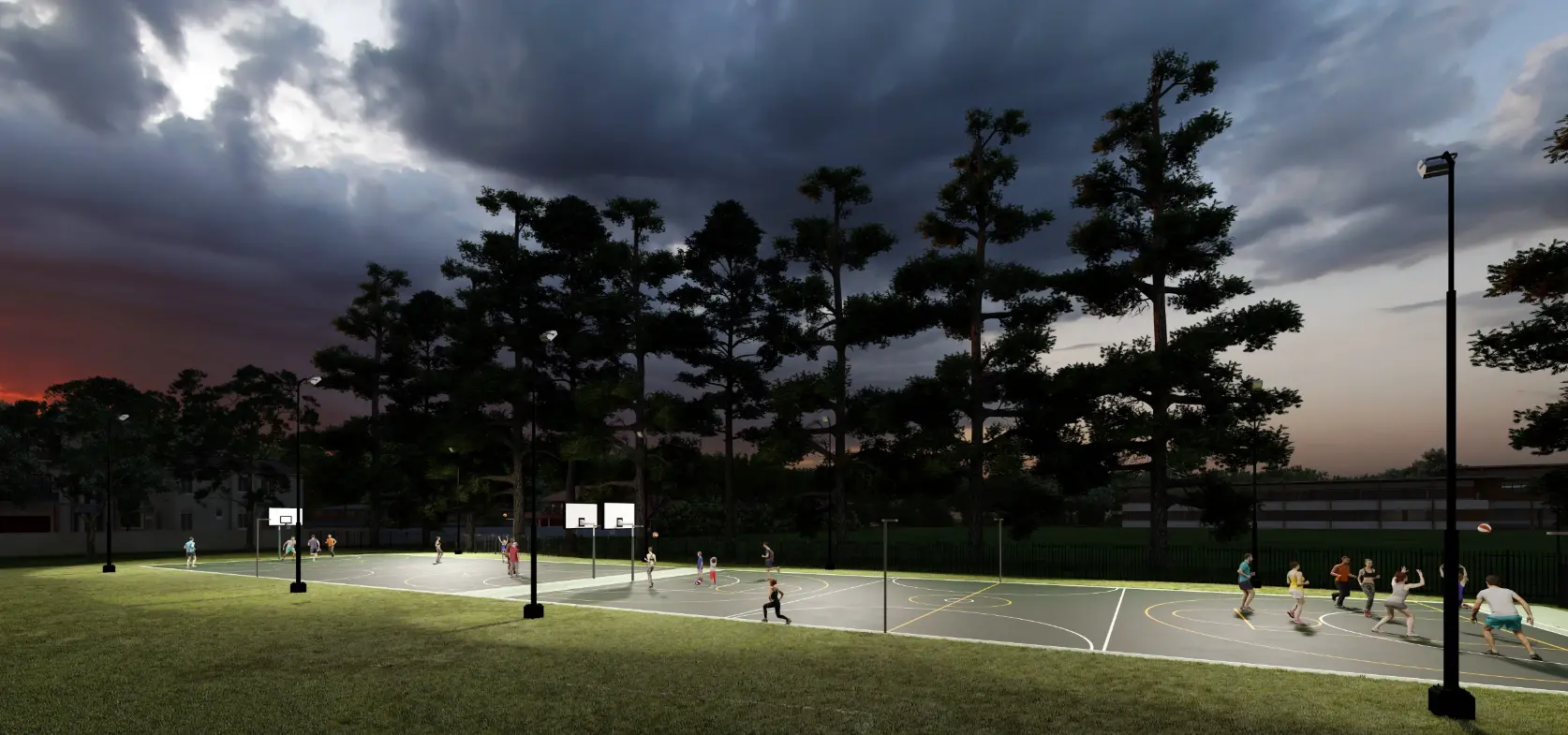
The lighting design would use eight poles, with four poles for each court. Each pole would be eight metres high and fitted with one luminaire. The design is intended to direct light onto the court surface while reducing spill and glare outside the court area.

The lighting would be designed to meet Australian Standards for outdoor netball and basketball training and recreational play, as well as standards that deal with the effects of outdoor lighting on nearby areas.

Court users would activate the lights through a push-button system beside each court. Each activation would last for 30 minutes, and the lights could not be switched on after 9pm.

Bookings would be available from 7am to 9pm on weekdays. Weekend bookings would be limited to daytime hours, with no bookings accepted after 5pm. When the courts were not booked, small groups and individuals could use them free of charge between 7am and 9pm each day.

Netball training bookings are mainly associated with the winter season, while basketball training can occur throughout the year, particularly during school terms.
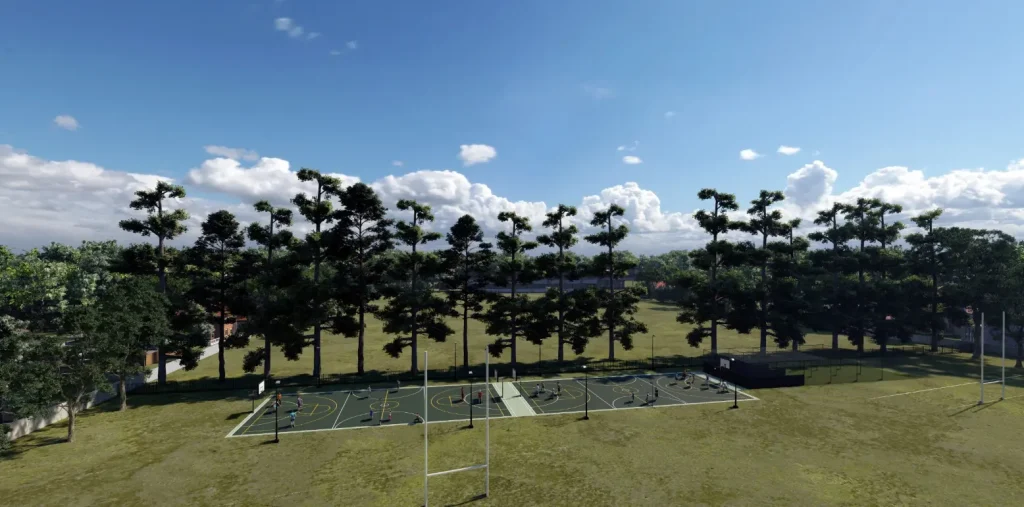
Netball and basketball court concept
Photo Credit: WoollahraCouncil

Feedback To Shape The Rose Bay Proposal

Community feedback on the draft plan opened on Wednesday 27 May 2026 and closes at 11:59 pm on Wednesday 8 July 2026.

A pop-up information session is scheduled at Woollahra Oval 2 and 3 on Tuesday 16 June, from 5:30 pm to 6:30 pm. Feedback can also be submitted online, by email or by mail.

After the feedback period closes, responses will be reviewed before the proposal moves to its next stage. If the plan proceeds, an environmental review would be prepared and assessed before any construction.


The project timeline indicates the courts could open in 2027, but only if the required review is approved and the works go ahead.

Published 5-June-2026
Inside Delta Goodrem’s New Luxury Home In Rose Bay 

Delta Goodrem has added a luxury Rose Bay mansion to her property story, with the singer and husband Matthew Copley securing a harbourside home in Sydney’s east for less than $11 million. 


Delta Goodrem’s New Rose Bay Home

Delta Goodrem and Matthew Copley are preparing for a new Sydney chapter after buying a luxury mansion in Rose Bay.

The singer and her musician husband purchased the four-bedroom, three-bathroom harbourside residence for less than $11 million. The sale was recorded on May 27, below the property’s earlier asking price of about $13 million.

The purchase comes shortly after Goodrem represented Australia at the 70th Eurovision Song Contest in Vienna, Austria, where she performed Eclipse and placed fourth. The timing adds a public backdrop to the move, but the centre of the story is the couple’s new home in one of Sydney’s best-known harbourside suburbs.

Goodrem and Copley married in Malta on June 16 last year. Their Rose Bay purchase gives the couple a larger Sydney residence with formal living spaces, landscaped outdoor areas and a private pool setting.

Delta Goodrem at Eurovision
Photo Credit: Laing+Simmons

French and Italian Influences Shape The Home

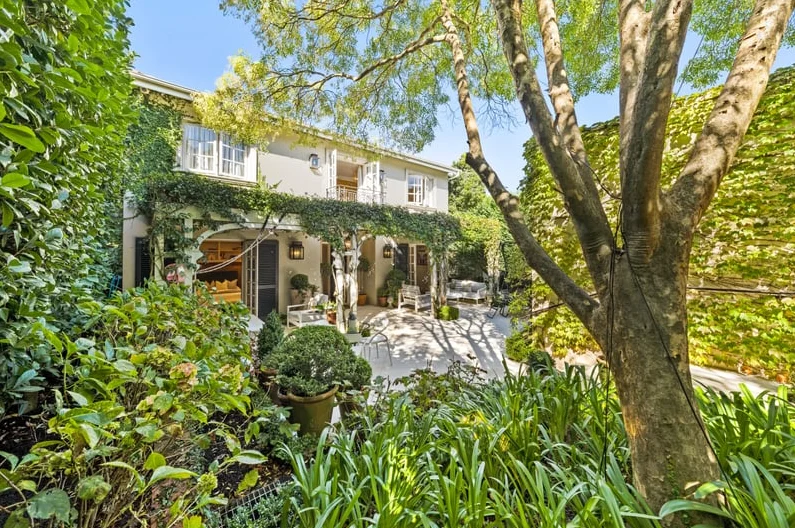
The Rose Bay mansion sits on a 626sqm block in a quiet, tree-lined harbourside setting. The home combines French Provincial and Italian influences, with interiors arranged around formal and informal living areas.

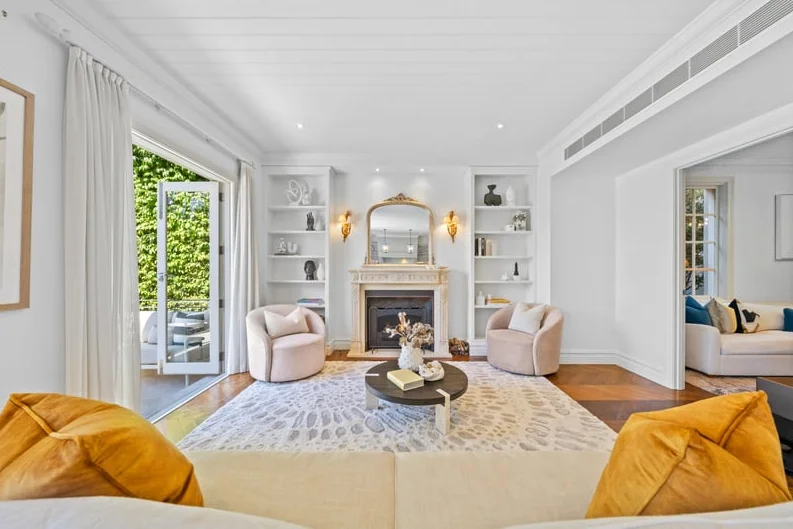
Inside, the residence includes imported Italian marble fireplaces, marble finishes and a warm neutral palette. The kitchen has a breakfast bar, butler’s pantry, dual dishwashers, a wine fridge and extensive storage.

High ceilings, French oak herringbone floors, ducted airconditioning, a security system, Control4 automation and lift access are also included. The main bedroom has a marble ensuite and a garden outlook, while the broader floor plan includes four bedrooms, oversized bathrooms and a flexible fourth bedroom or home office opening to a sunlit terrace.

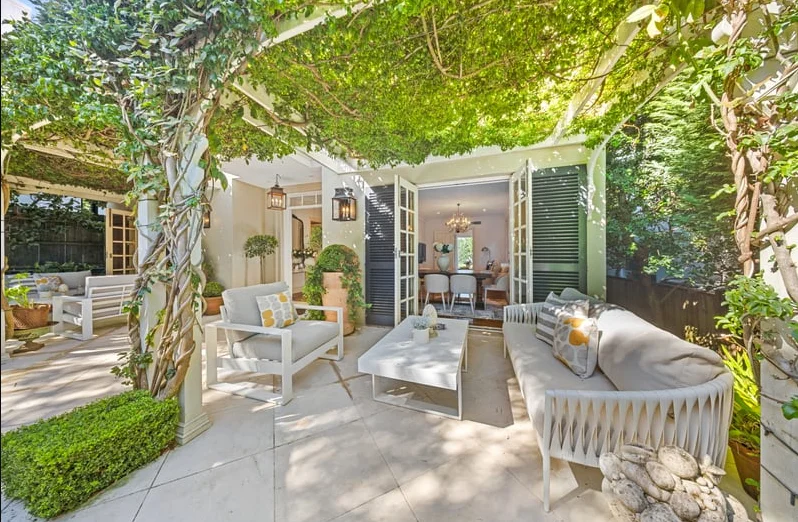
The home also includes a double lock-up garage with storage, landscaped front gardens and several alfresco entertaining areas.

Rose Bay mansion garden
Photo Credit: Laing+Simmons

Rose Bay Mansion Framed By Designer Gardens

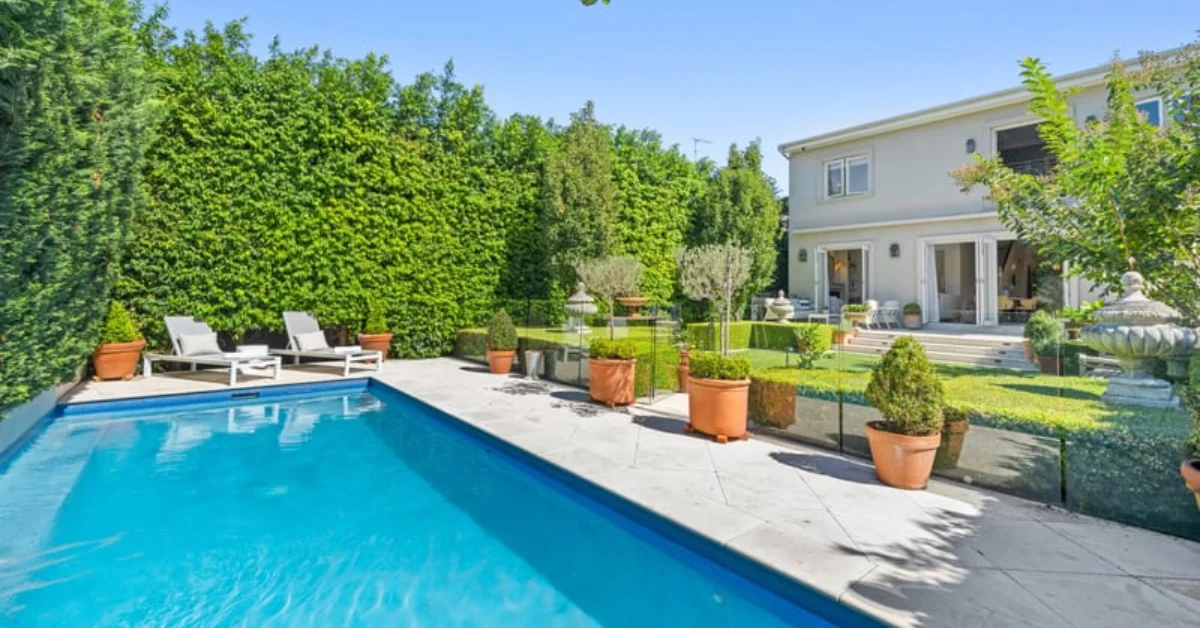
The outdoor areas give the property much of its character. The residence is surrounded by established gardens designed by landscape architect Paul Bangay, with planted front and rear spaces arranged for outdoor living.

A bougainvillea-covered terrace sits at the front of the home, while the rear opens to another alfresco area, level lawn and heated pool with a cascading water feature. The layout gives the property a private garden setting while keeping it close to harbour beaches, village cafés and private schools.

For Goodrem, the purchase marks an upsizing from her known Sydney apartment base. In 2019, she bought a two-bedroom apartment in Darlinghurst’s The Residence development overlooking Hyde Park for $4.825 million. The complex includes a 20-metre lap pool, gym, spa, sauna, steam room, wine room and concierge.

Luxury home with heated pool
Photo Credit: Laing+Simmons

Sale Handled Through Double Bay Office

The Rose Bay sale was handled by D’Leanne Lewis of Laing+Simmons Double Bay. Goodrem and Copley were represented by Simon Cohen of Cohen Handler.

The property was previously owned by Plato Investment Management’s Dr David Allen and his family. Allen paid $8.9 million for the residence in 2021 after returning from London, where he had worked for JP Morgan.


Goodrem’s plans for her Darlinghurst apartment remain unknown. The couple have also been linked to reports of house-hunting in Brisbane with Cohen, although no Queensland sale has been confirmed.

Published 4-June-2026
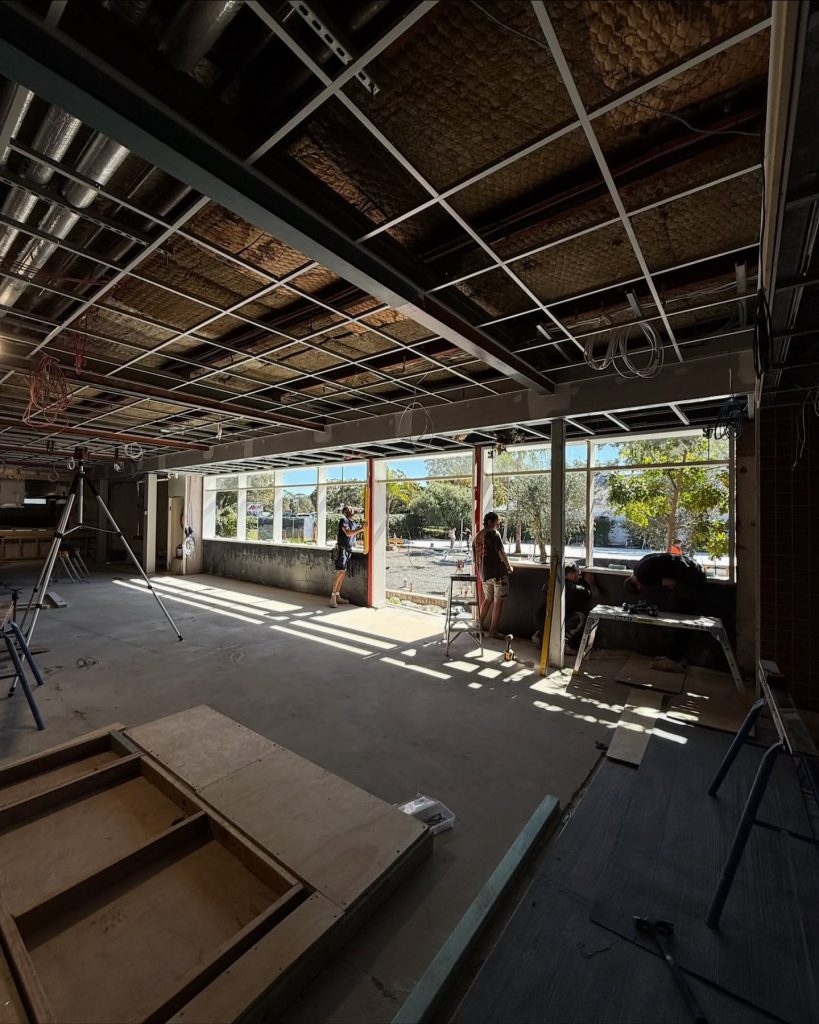
Rose Bay Seniors Housing Plans Draw Focus To Excavation And Groundwater Concerns

Two neighbouring seniors housing proposals in Rose Bay have placed fresh attention on Wilberforce Avenue and Dover Road, where planned multi-storey developments are being considered alongside local concerns about excavation, groundwater and construction impacts.


Two Rose Bay Sites Move Through Early Planning

The proposals cover adjacent sites in Rose Bay and would add a significant seniors housing presence to the Wilberforce Avenue and Dover Road area.

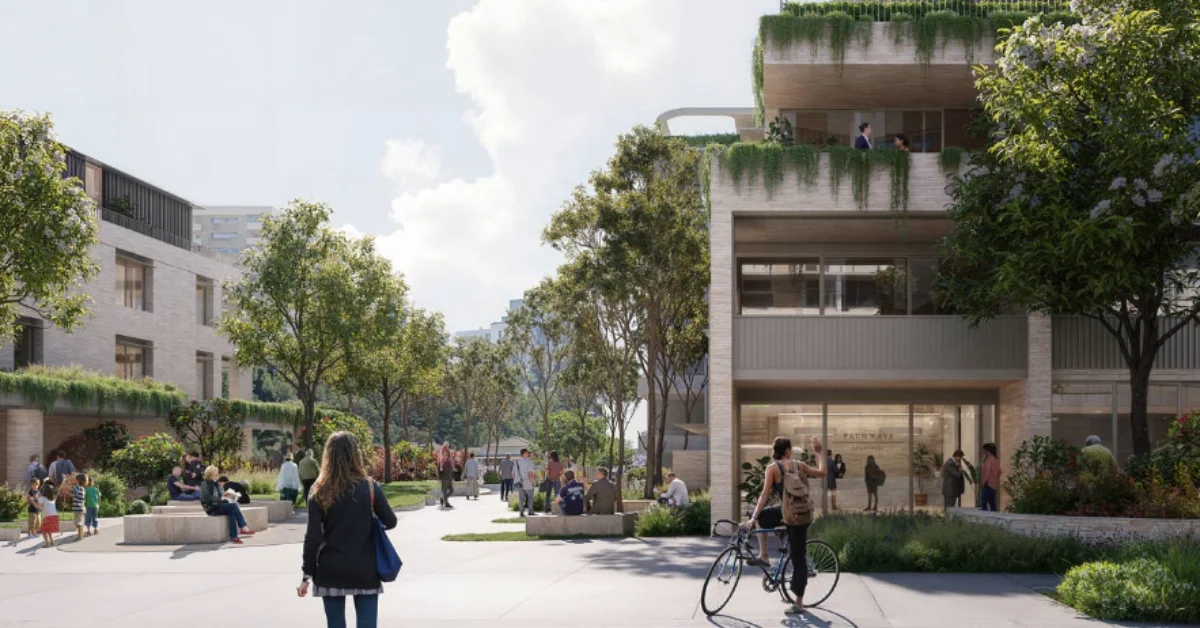
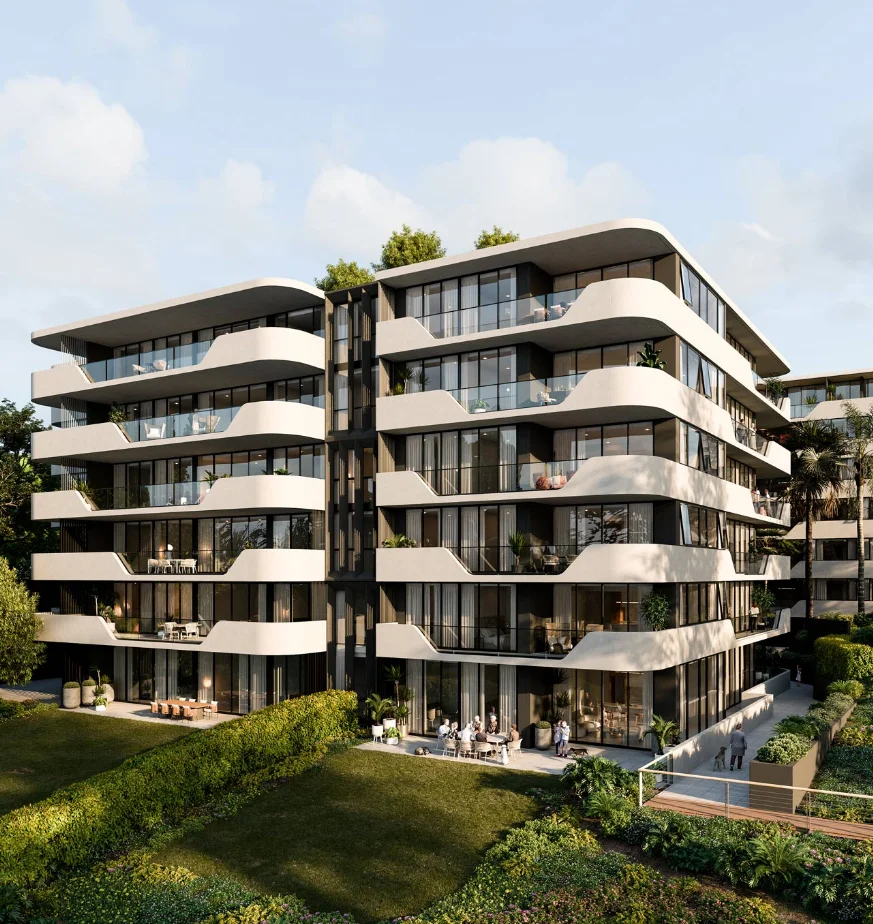
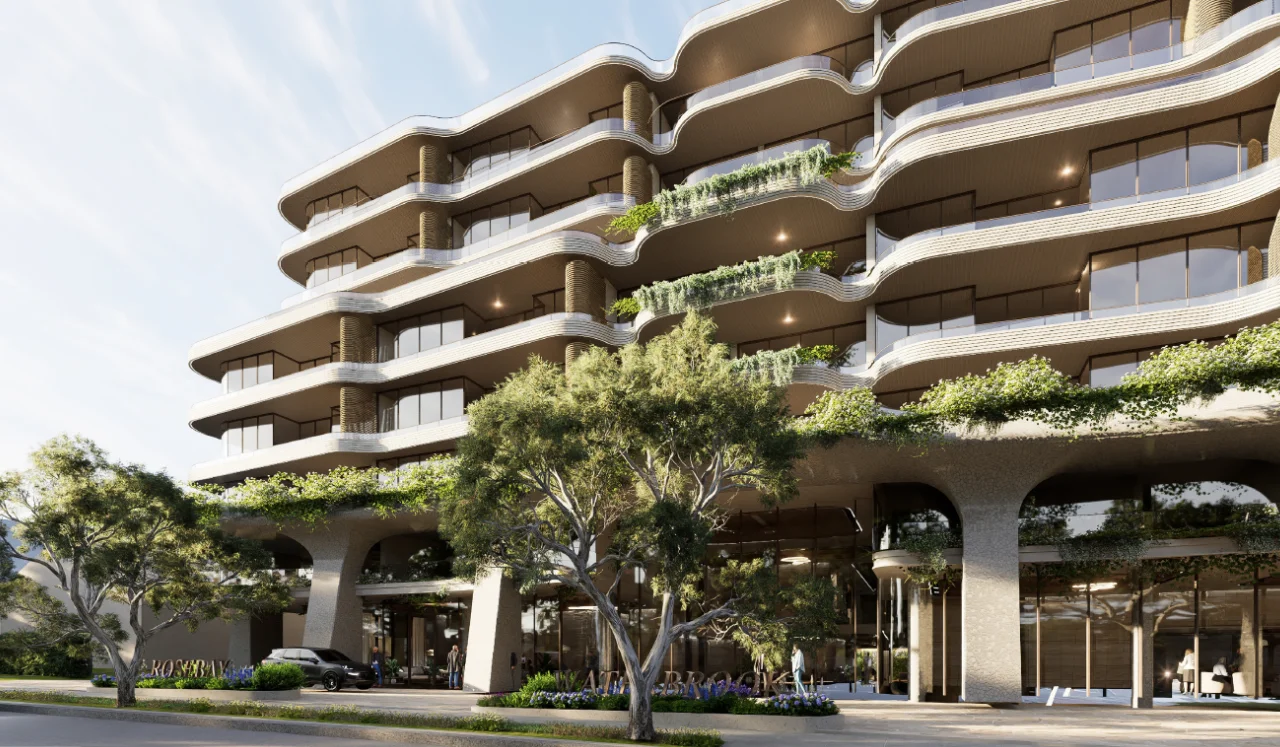
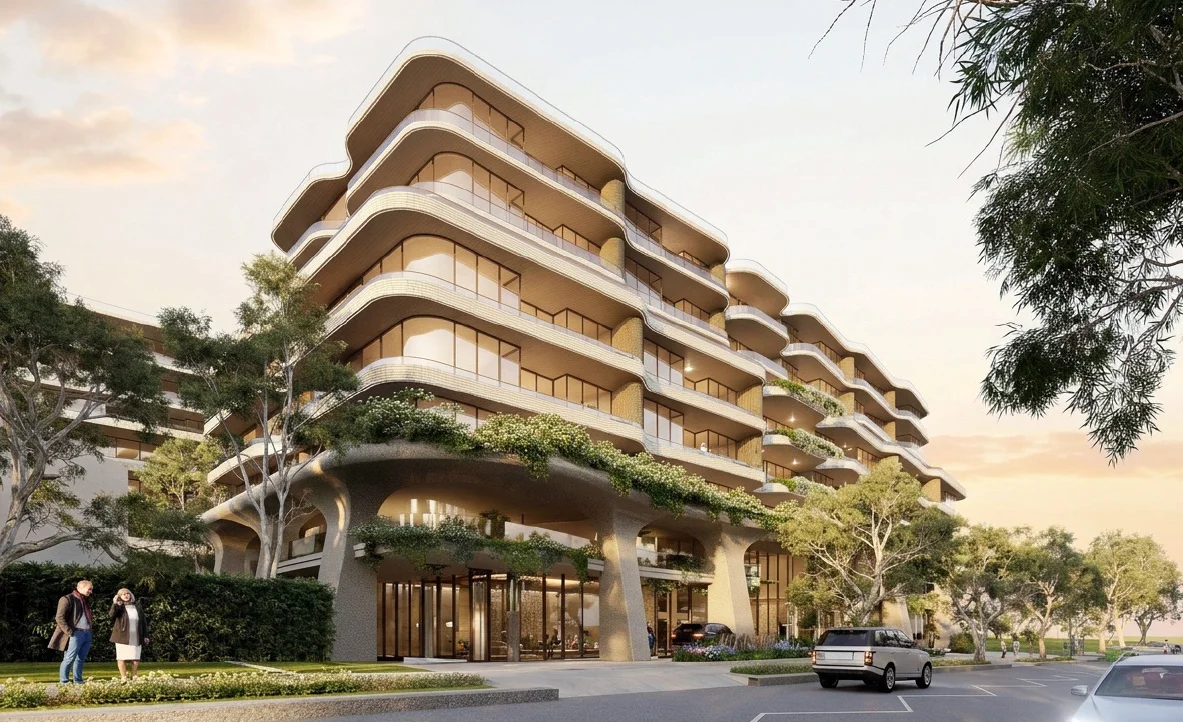
Amara Rose Bay, led by Pathways Residences, is proposed for 20–30 Wilberforce Avenue and 33–37 Dover Road. The project is being prepared as a major planning application, with submission expected in mid-2026. It is planned to open in 2028.

The proposal includes demolition of existing structures, site preparation and earthworks for two buildings of eight to nine storeys. The development would include about 70 independent seniors living units and 50 residential aged care rooms, along with two basement parking levels, shared resident facilities and landscaping.

A second seniors housing proposal is planned for the neighbouring site at 32–42 Wilberforce Avenue and 41–55 Dover Road. That project is also in the early planning stage and is expected to include demolition, excavation and construction of an eight-storey building with rooftop space.

The neighbouring proposal would include about 105 independent living units, 10 aged care rooms, landscaping, servicing works and resident facilities. Its planned communal areas include rooftop open space, wellness facilities, dining and recreation spaces, a pool, gym-related facilities, meeting rooms and a salon.

Photo Credit: Amara Residences

Excavation Concerns Centre on Wilberforce Avenue

The concentration of proposed works has become a key concern for some Rose Bay residents, particularly because the sites sit beside each other and include excavation works.

Local concern has focused on the possibility of cumulative impacts from several nearby projects, especially where basement construction and ground works are proposed close together. Residents have raised concerns about shallow groundwater, flood susceptibility and settlement-prone soils in the area, as well as the possibility that construction impacts could extend beyond individual site boundaries.

Those concerns have also been shaped by recent references to property damage in Rose Bay, including the partial collapse of the historic Hillcrest home and damage reported at other properties during nearby construction and dewatering works. Those incidents are separate from the proposed seniors housing projects, but they have contributed to closer local scrutiny of excavation and groundwater management.

Residents have also raised questions about the longer-term effect of multiple basement structures within the same connected groundwater system. The issue is not limited to the design of either project on its own, but to how neighbouring developments could affect the surrounding block if they proceed at similar stages.

Rose Bay Seniors Housing
Photo Credit: Rose Bay Seniors Housing/HillPDA

Technical Studies To Shape Next Steps

Both proposals remain subject to further design work, consultation and assessment.

For Amara Rose Bay, technical work is expected to include biodiversity, traffic and transport, geotechnical and groundwater reports. The project also proposes shared spaces such as lounges, kitchen areas, a cinema, pool and landscaped communal areas.

For the neighbouring Rose Bay seniors housing proposal, planned supporting work includes construction management, traffic and heritage assessments. Community engagement has also taken place, including an online briefing held on 19 May 2026.

The two projects are different in scale and mix, but together they have created a larger question for the area: how much excavation and construction activity can be managed on adjoining sites while addressing local concerns about ground conditions, traffic and nearby properties.


For now, both developments remain proposals. Their final form will depend on further design work, technical reports, consultation and the outcome of the planning process.

Published 21-May-2026

Rose Bay Apartment With No Parking Sells For $1.3 Million

A below-street-level Rose Bay apartment with no parking, limited natural light and no windows in its main living areas has sold for $1.3 million, after a renovation helped reposition the unusual property in one of Sydney’s most sought-after suburbs.


Unusual Rose Bay Sale Draws Attention

The two-bedroom apartment at 4/1A Caledonian Road sold at auction for $1.3 million, above the expected range of about $1.1 million to $1.2 million.

The result stood out because the home came with several clear drawbacks. It had no parking, sat below street level and had no windows in the living room, kitchen or dining area. Despite those limitations, the final sale price was about $100,000 above the guide.

Ray White Eastern Beaches handled the sale, with the listing showing the property sold on 18 Apr 2026. The apartment had two bedrooms, one bathroom and 91 square metres of internal living space.

Caledonian Road Rose Bay
Photo Credit: Ray White Eastern Beaches

Former Recreation Room Became A Renovated Home

The Rose Bay property was originally used as a billiards and recreation room when the building was first constructed. It was later converted into an apartment and bought by the vendors as a one-bedroom property in October 2023 for $785,000.

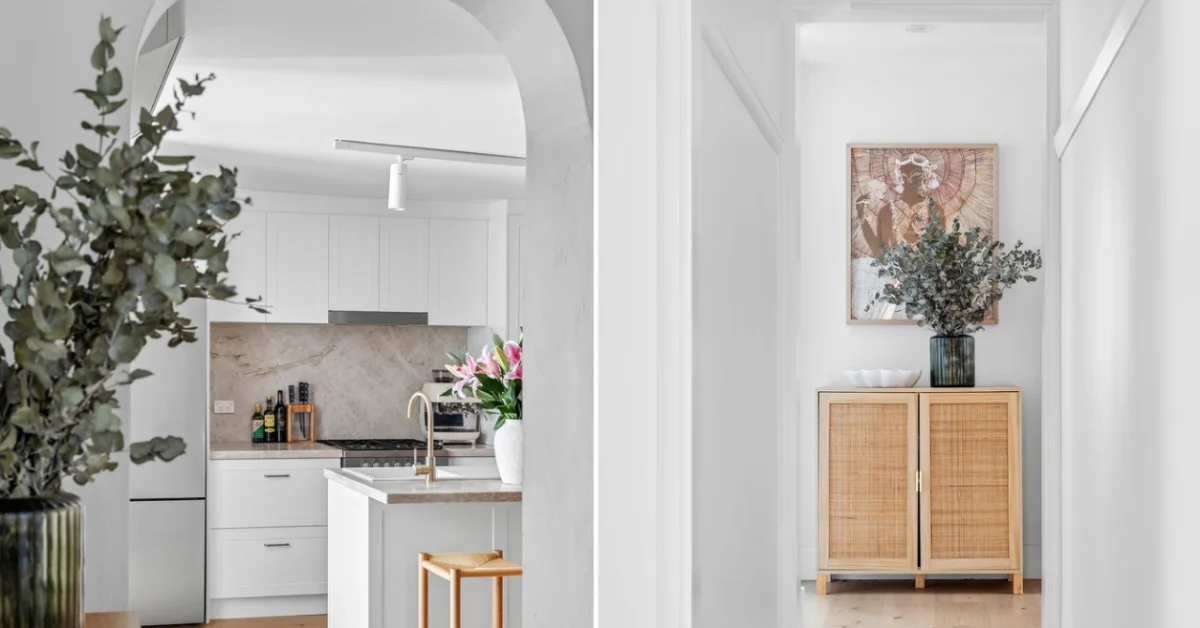
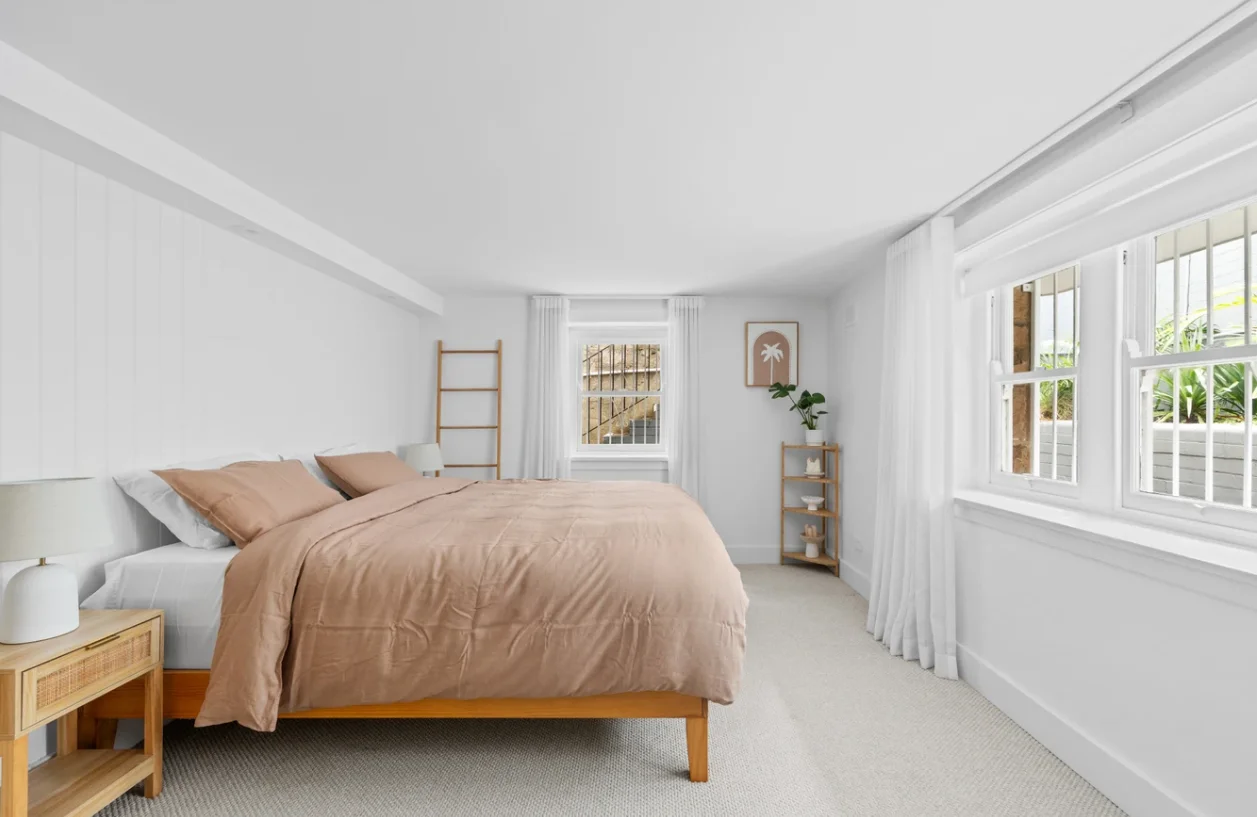
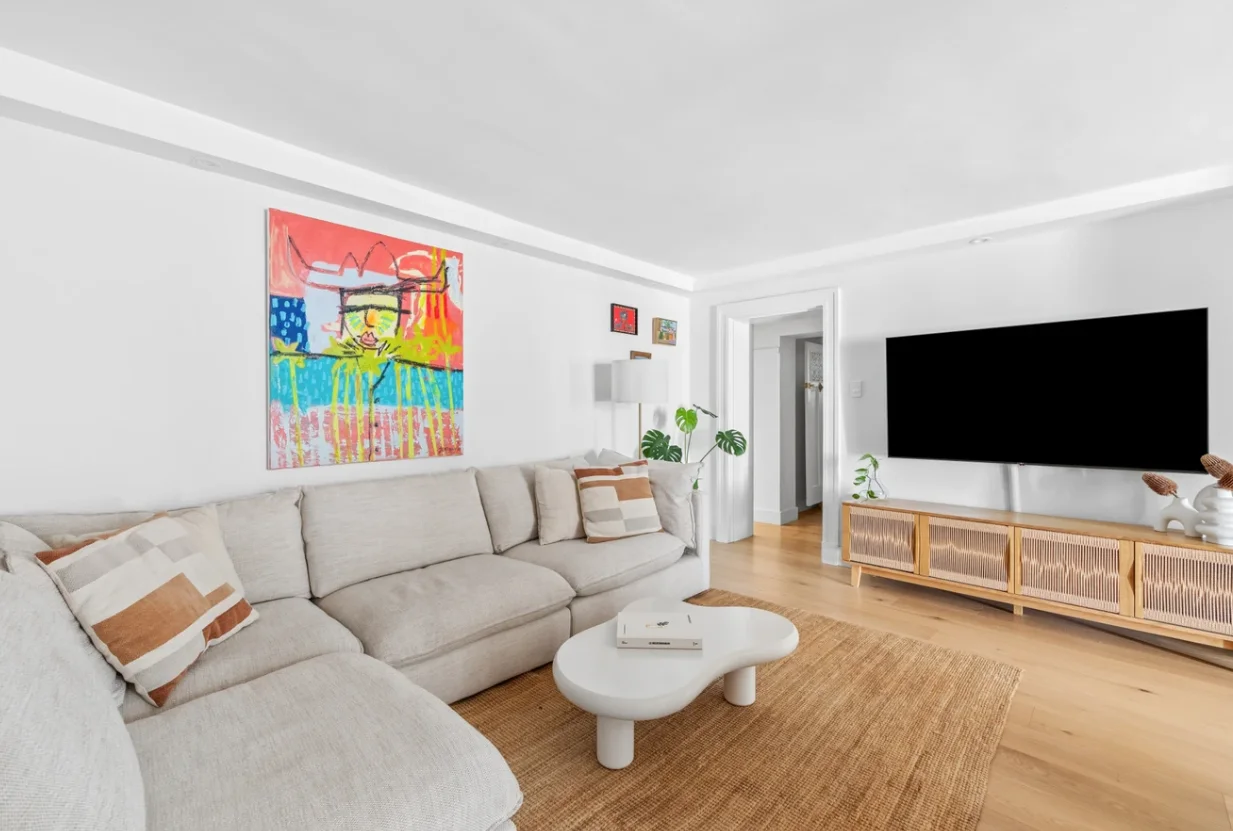
The owners then spent $80,000 on renovations before the home returned to the sale campaign as a two-bedroom apartment. The finished residence was presented with refreshed interiors, an open living and dining area, a kitchen with an island bench, built-in wardrobes in both bedrooms, a renovated bathroom, internal laundry, air conditioning and added storage.

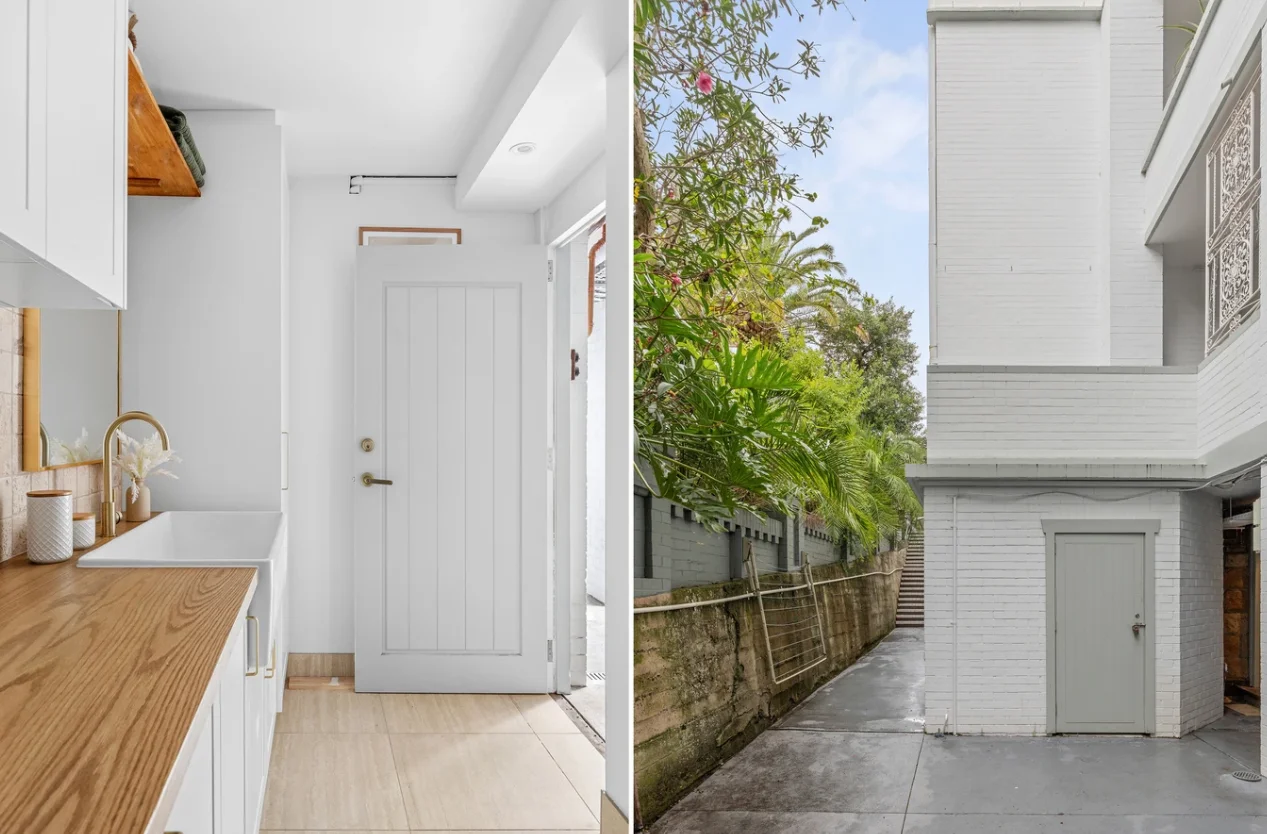
It also had front and rear access, a separate study area and private entry, giving the below-street-level home a more flexible layout than its original use suggested.

Rose Bay property
Photo Credit: Ray White Eastern Beaches

Location Helped Offset The Trade-Offs

While the apartment lacked features such as parking, balcony access and strong natural light, its Rose Bay position remained central to its appeal.

The property was promoted as being close to local shops, cafés, harbour beaches and transport, including the Rose Bay Ferry Terminal. Its location near everyday amenities helped frame it as a move-in-ready home in a tightly held coastal pocket.

The sale also reflected a preference among some first home buyers for completed properties rather than homes needing further work. High renovation costs and cost-of-living pressure were identified as factors making buyers more cautious about taking on major upgrades after purchase.

Ray White Eastern Beaches
Photo Credit: Ray White Eastern Beaches

Finished Condition Proved Important

The sale of 4/1A Caledonian Road shows how presentation can influence buyer interest when a property has clear compromises. The apartment did not offer every feature commonly expected in a two-bedroom home, but it did offer a renovated interior, usable space and a Rose Bay address.

For the vendors, the $1.3 million result marked a sharp rise from the $785,000 purchase price recorded in October 2023, before allowing for the $80,000 renovation and any other costs.


For buyers, the result underlined the trade-offs often involved in sought-after Sydney locations. In this case, a below-street-level apartment with no parking and limited natural light still attracted a seven-figure sale once renovation, size and location were brought together.

Published 6-May-2026

Rose Bay Junior Sailing Series Opens With Strong Woollahra Turnout

More than 80 young sailors raced on Sydney Harbour as Woollahra Sailing Club in Rose Bay hosted the opening round of the 2026 NSW Optimist Interclub Series.


Young Sailors Race At Rose Bay

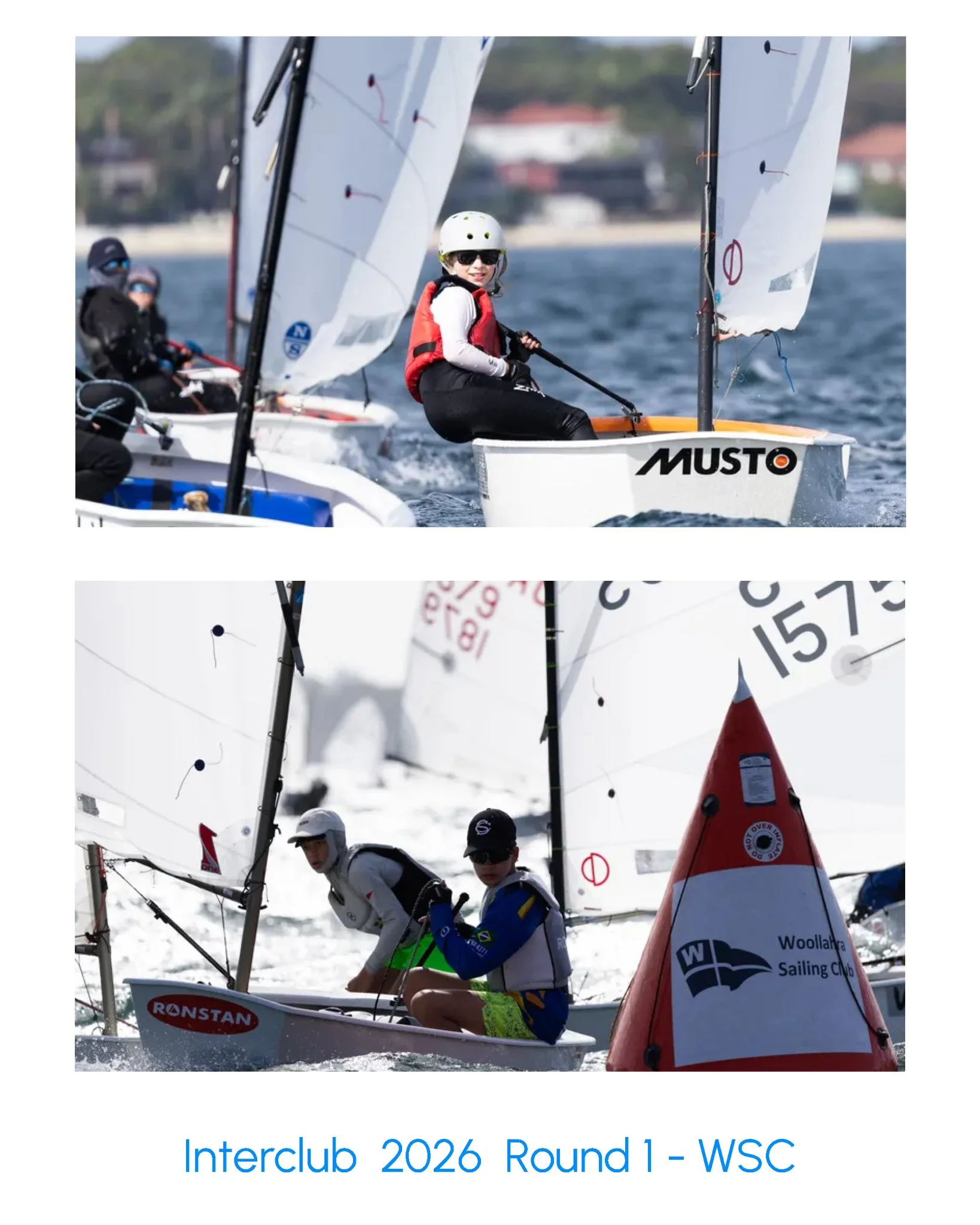
The first round of the 2026 NSW Optimist Interclub Series was held at Woollahra Sailing Club on 3 May 2026, bringing together junior sailors from clubs across New South Wales for a full day of Optimist racing.

Now in its third year, the Interclub series remains free to enter and volunteer-run. The format is aimed at giving young sailors early racing experience while keeping junior competition accessible across the club sailing community.

Competitors raced in the Optimist class, an internationally recognised entry-level dinghy for sailors aged between 8 and 15. The class is commonly used to develop boat handling, tactical decision-making, racecraft and sportsmanship.

Racing began late in the morning after a competitor briefing, with officials completing a full schedule of short-course races across the day.

NSW Optimist Interclub
Photo Credit: James Hill @mainsheet.in/NSW International Optimist Dinghy Association/Facebook

Favourable Conditions On Sydney Harbour

The opening round was held in warm autumn conditions on Sydney Harbour, with the day reaching 26 degrees. Wind conditions were reported as a northerly to north-easterly breeze, with ranges given between 10 and 17 knots across the day.

The steady conditions gave the fleet the chance to race through the full program and allowed competitors to test their handling, decision-making and consistency on the water.

Onshore, families and supporters added to the club atmosphere as the series began its 2026 program at Woollahra Sailing Club.

Woollahra Sailing Club
Photo Credit: James Hill @mainsheet.in/NSW International Optimist Dinghy Association/Facebook

Open And Intermediate Fleet Results

In the Open Fleet, Walter Healy from Woollahra Sailing Club placed first sailing Fish. Luca De Giosa from Hunters Hill Sailing Club placed second with Faccenda Sailing Team, while Sijia Deng from Hunters Hill Sailing Club placed third with Come Together and was also recognised as the first female sailor in the fleet.

In the Intermediate Fleet, Omar Mansour from Georges River Sailing Club placed first sailing Bolt. Max Hughes from the Royal Sydney Yacht Squadron Academy placed second with Far Out, while Lara Dorling from the Royal Prince Alfred Yacht Club off-the-beach program placed third with Lord Lion and was recognised as the first female sailor in the fleet.

NSW Optimist Interclub
Photo Credit: James Hill @mainsheet.in/NSW International Optimist Dinghy Association/Facebook

Volunteers Support Junior Sailing Series

The Interclub series relies on volunteers, parents, race officials, coaches and club support to run each round. Woollahra Sailing Club hosted the opening event, with Royal Sydney Yacht Squadron and Hunters Hill Sailing Club also supporting the broader series.

The event was also supported by Ronstan, Boatcrewgear.com, North Sails, White Bay Marine Park, Vaikobi, NB Sailsports and Rooster Australia, with gifts and prizes provided for competitors throughout the series.


Round 2 of the 2026 NSW Optimist Interclub Series is scheduled to be hosted by Royal Sydney Yacht Squadron on 24 May 2026, giving sailors another opportunity to build on the opening round.

Published 6-May-2026

The Ship That Built a Navy: Rose Bay’s Tingira Memorial Park and the Story Behind It

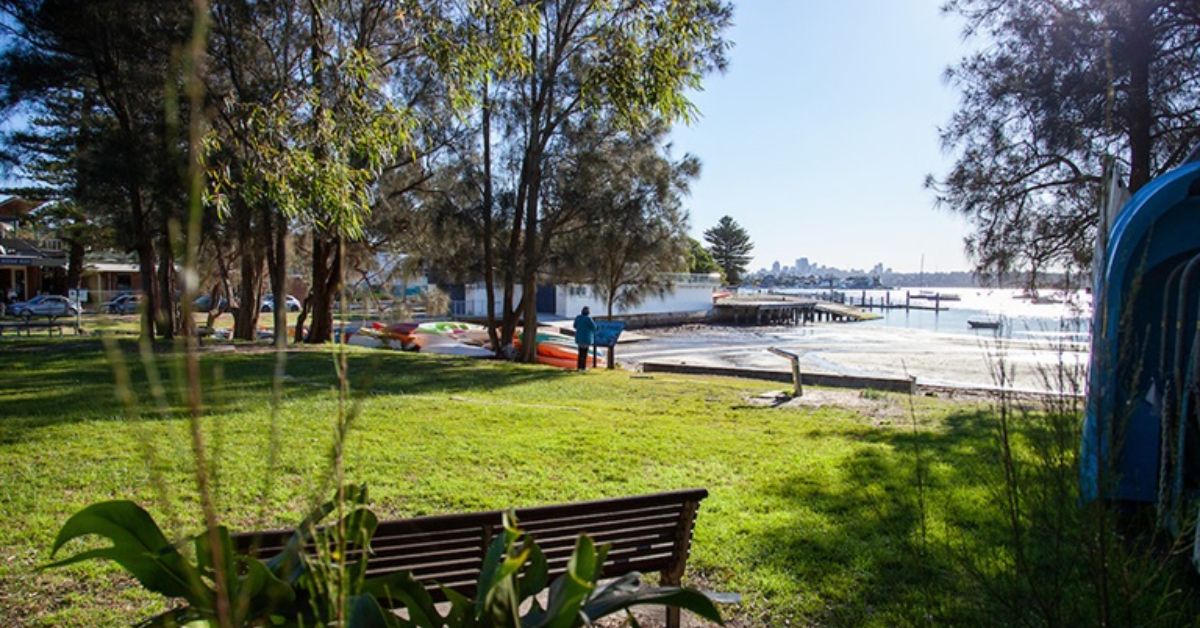
Tucked along the Rose Bay foreshore on New South Head Road, Tingira Memorial Park commemorates one of the most formative chapters in Australian naval history, honouring the training ship Tingira that moored in these waters from 1912 to 1927 and shaped the earliest generation of Royal Australian Navy sailors.


The park sits at the eastern corner of Vickery Avenue, where the harbour opens out toward the Heads, and it remains one of the few physical reminders of a vessel that trained more than 3,000 young men for naval service, including those who would go on to serve in the First World War.

For Rose Bay residents, the park is a quiet foreshore reserve with harbour views and beach access. For anyone who knows its history, it carries a significance far beyond its modest size.

From Aberdeen to Rose Bay: A Ship With Three Lives

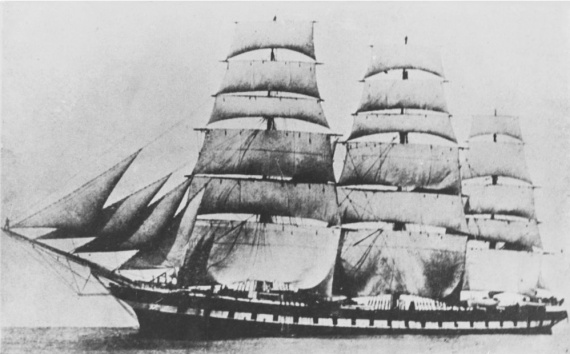
The story of Tingira begins not in Sydney but in Aberdeen, Scotland, where Alexander Hall and Sons launched the vessel in 1866 under the name Sobraon. Built as the largest composite-hull sailing ship ever constructed, with a teak hull over an iron frame and more than two acres of sail under full canvas, Sobraon was designed for speed and capacity on the England-to-Australia migration route. She carried up to 90 first-class passengers per voyage, offered daily fresh milk from onboard livestock, and could reach 16 knots, making her one of the more sought-after ships on the run for the 25 years she worked it.

HMAS Tingira
HMAS Tingira. Photo Credit: Sea Power Centre Australia

When Sobraon retired from passenger service in 1891, the New South Wales colonial government purchased her and moored her off Cockatoo Island as a reformatory ship for troubled boys, training more than 4,000 of them in maritime skills over two decades. Then, in 1911, the newly formed federal government acquired her for a purpose that would define her legacy.

She was refitted, repainted white with yellow masts, and commissioned into the Royal Australian Navy as HMAS Tingira on 25 April 1912, an Anzac Day date that now carries its own layer of meaning. Tingira is an Aboriginal word for “open sea.”

The Cradle of the RAN

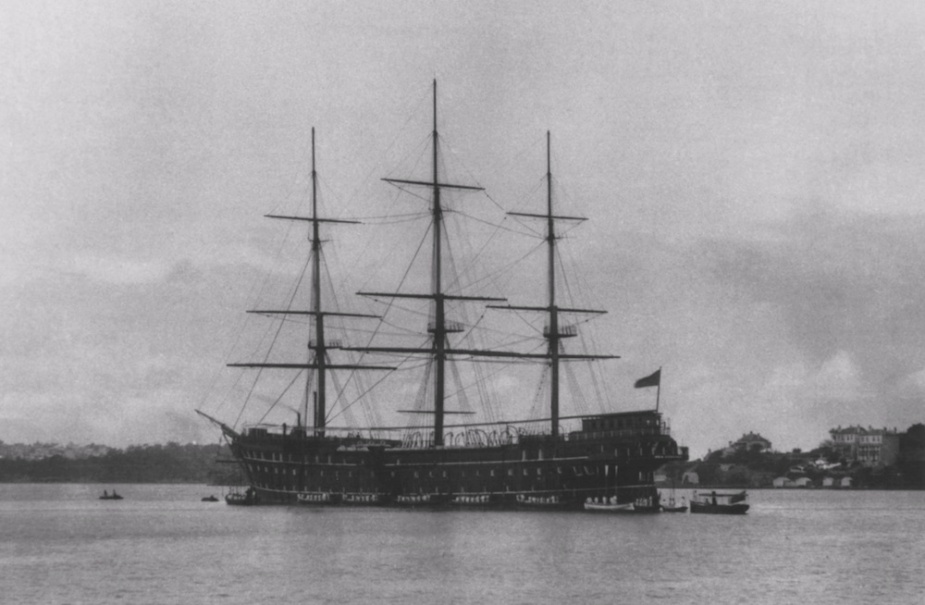
Naval historians have long referred to Tingira as the Cradle of the Royal Australian Navy, and with good reason. Moored on a swinging anchor in the middle of Rose Bay, she served as the Navy’s primary training vessel for boys aged 14 and a half to 16 under the Department of the Navy’s boy enlistment scheme. Up to 250 trainees could be accommodated at any one time, though the complement rarely exceeded 200. Between her commissioning and decommissioning in 1927, Tingira trained 3,158 young men for naval service, many of whom saw active duty during the First World War.

HMAS Tingira. Photo Credit: Sea Power Centre Australia

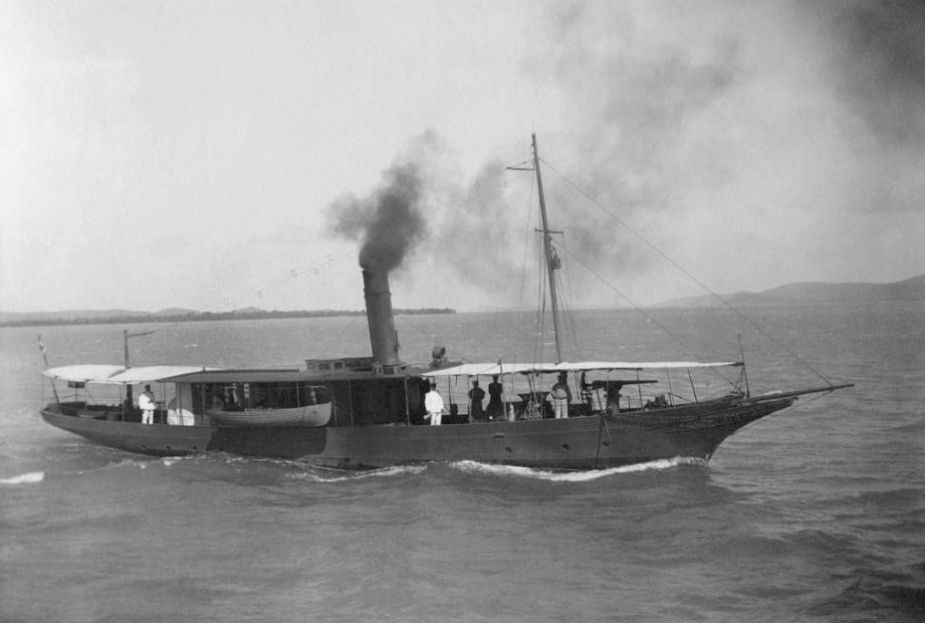
Because the ship itself was permanently moored, a steam yacht tender, HMAS Sleuth, was attached to provide trainees with actual seagoing experience. The combination of classroom and on-water instruction aboard the two vessels gave the RAN a structured pathway for producing capable lower deck sailors during the years when Australia’s naval identity was still being formed.

HMAS Sleuth. Photo Credit: Sea Power Centre Australia

Tingira was paid off in June 1927 when the Navy changed its recruiting arrangements and the ship became surplus to requirements. She spent years deteriorating in Berry’s Bay, was sold to a private owner who died before putting her to any use, and eventually passed into the hands of those who tried and failed to preserve her as a national relic. Shipbreakers dismantled the vessel in 1941, salvaging her valuable teak and brass for the war effort before disposing of the remaining hull. 

A Park That Keeps the Memory Afloat

The memorial park that now bears her name was established in two stages, the first in 1962 and the second completed in 1977, by which point the Tingira Old Boys Association had worked with local authorities to formalise the tribute. A refurbishment in 2004, funded jointly by the Australian Department of Veterans’ Affairs, the Woollahra municipal authority and the Rose Bay RSL Club and Sub-Branch, brought the park to its current form, designed by Jane Irwin Landscape Architects in association with McGregor Westlake Architects.

Photo Credit: Monument Australia

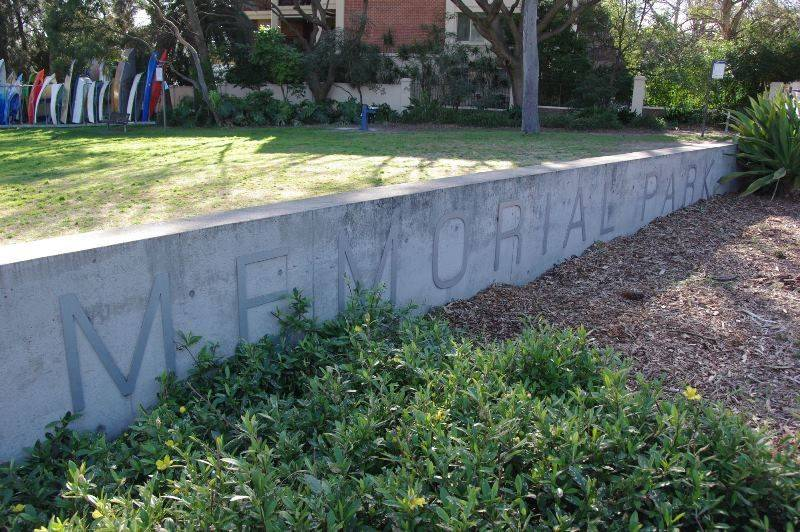
The redesign opened up harbour views framed by existing casuarina stands at the water’s edge and installed a low wall with metal lettering and display panels carrying the ship’s history and plaques honouring trainees.

The park’s connection to Anzac Day runs deeper than most visitors realise. Tingira was commissioned on 25 April 1912, the very date that would, three years later, become etched into Australian memory at Gallipoli. Many of the young men she trained in those early years went on to serve in the war that followed. For communities across the Eastern Suburbs who mark Anzac Day each April, the park on the Rose Bay foreshore is a place where that connection becomes tangible.

Visiting Tingira Memorial Park

Tingira Memorial Park sits on New South Head Road in Rose Bay, with direct access to Rose Bay beach and a foreshore walk that continues east along the harbour. Full details on the park and its facilities are available here.


Published 17-April-2026

Anzac Unease Grows in Rose Bay as Veterans Question Club Revamp


Club Rose Bay was once relied on by veterans and older locals for a drink, a catch-up and Anzac commemorations, but it has become the centre of disagreement within the community, with long-time members saying the revamped venue no longer feels built for the people it was meant to serve. 


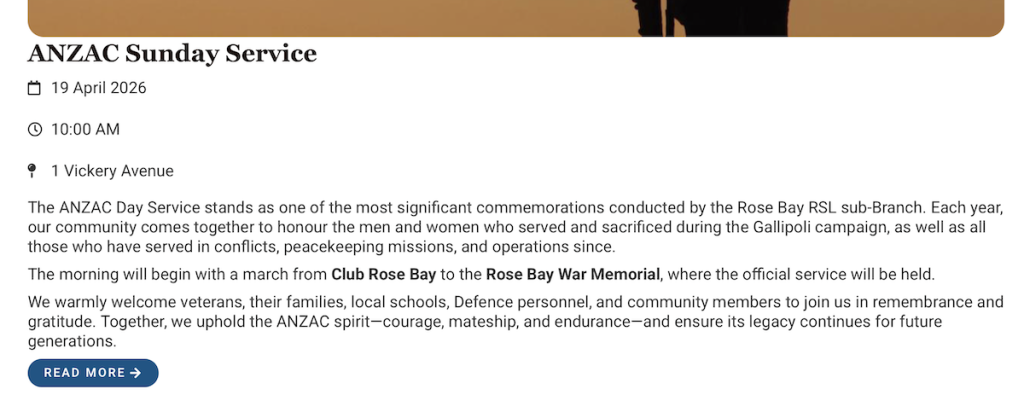
The dispute has flared in the lead-up to Anzac Day, when Rose Bay’s RSL sub-Branch is preparing its annual service and community gathering. On its own public schedule, the sub-Branch lists an ANZAC Sunday Service for April 19, 2026, while Merivale is promoting Anzac Day trading and two-up at Club Rose Bay on April 25. 

Photo Credit: Merivale/Club Rose Bay

The overlap has sharpened a local question: can the new-look venue still meet the expectations many veterans and older members have of an RSL at the most important time of the year? 

Rose Bay’s Anzac Focus Meets a New Club Identity

Club Rose Bay was brought back from administration after members voted 147 to one in January 2025 to proceed with a Merivale management deal. Reports at the time described the club as being under major financial strain, with the site having closed in 2024 before the rescue package was backed by members. The vote gave Merivale, led by Justin Hemmes, control of food and beverage operations, while the club itself continued as a registered club. 

Since then, the venue has been repositioned as Club Rose Bay and reopened after a year-long refurbishment in December 2025. Merivale and design coverage around the reopening described a broad remake of the site, presenting it as a renewed local destination with hospitality, outdoor trading and updated social spaces. Lifestyle coverage also cast the project as the venue’s biggest refresh in decades. 

This fresh start has not landed the same way with everyone. The central complaint from critics is not simply that the club looks different, but that its role in community life has shifted. Veterans and older members argued the atmosphere now feels more suited to younger patrons arriving for food, drinks and entertainment than to ex-service people wanting the familiar club culture associated with an RSL, especially ahead of Anzac Day. 

A Club Saved for Some, But Harder to Use for Others

The strongest concern is practical as much as symbolic. The loss of the car park and the move toward a busier outdoor venue had made the site harder for older patrons to use. Old-time patrons pointed to parking pressure, access issues and long waits for service as signs the club’s daily rhythm had changed. 

For older veterans, it’s more than just comfort. Rose Bay RSL describes its Anzac service as one of the most significant events organized by the sub-Branch each year. This means that concerns about queues, noise, access, and crowd mix are not just practical issues. These concerns reflect a belief that a place linked to service and memory is changing too quickly for them to keep up with.

Supporters of the revamp make a different case. Their argument begins with the fact that the club was in serious trouble before the Merivale deal. Seen through that lens, the new Club Rose Bay is not a takeover of a healthy institution but an attempt to stop one from failing. 

The debate around Club Rose Bay is no longer just about outdoor trading, crowd noise or planning rules. At the centre of that divide is a simple question: who is the club really for? 


Published 16-April-2026

Rose Bay Rugby Club Opens Long-Awaited Women’s Change Rooms

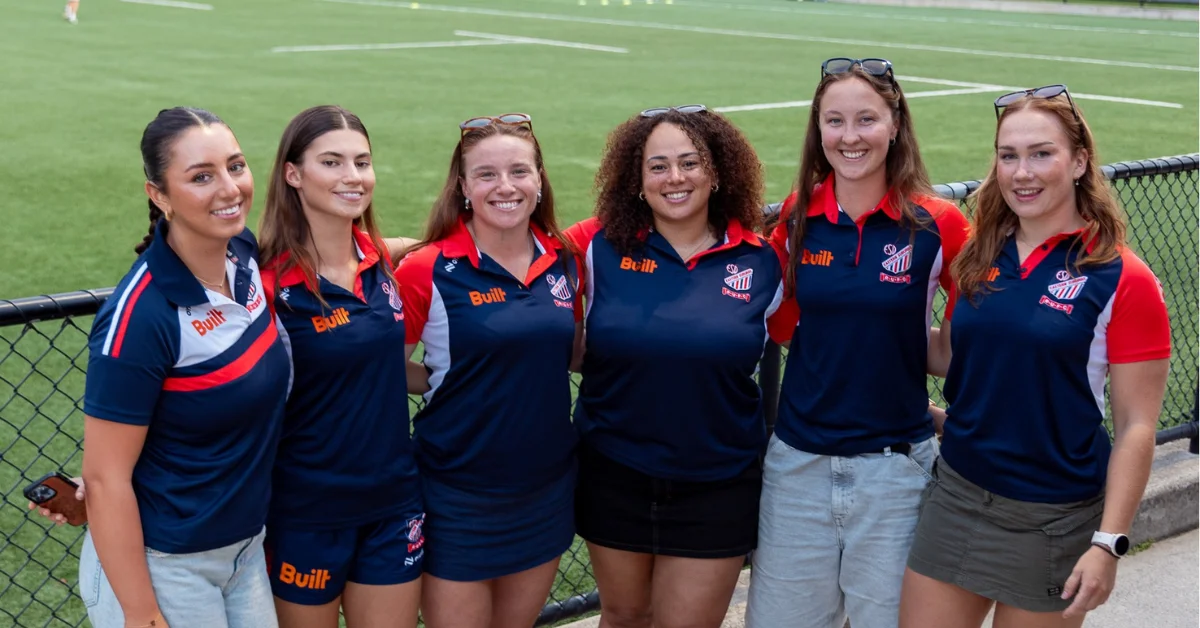
New women’s change rooms are now open at Easts Rugby in Rose Bay, giving female players access to dedicated facilities at a local club where women’s sport continues to grow.


The new women’s change rooms at Easts Rugby Club have opened at Andrew Petrie Oval in Rose Bay, marking a practical upgrade for female players and the wider club community.

The opening was marked on 10 April, with the facilities arriving in time for the rugby season. The project has been described as long awaited and is centred on improving the experience of women and girls taking part in local sport.

For Easts Rugby, the new building addresses a basic but important need. Female players now have dedicated change room facilities at the club, rather than relying on unsuitable arrangements before and after games or training.

 female change rooms,
Photo Credit: WoollahraCouncil/Facebook

Easts Rugby Upgrade Supports Female Participation

The Rose Bay project has been closely linked to women’s sport participation and the need for facilities that properly support female players.

Before the upgrade, concerns had been raised that women and girls should not have to change in cars when taking part in sport. The new change rooms provide a more appropriate space for players and help make the club environment more practical for women and girls at different levels of participation.

The opening also reflects the growing attention being given to female sport at community level. As clubs encourage more women and girls to take part, facilities such as change rooms, amenities and team spaces play a direct role in making participation easier and more sustainable.

New Facilities Add To Easts Rugby Club

The new building includes dedicated female change rooms, accessible amenities, first aid and referee rooms, team areas and a covered viewing veranda.

Those additions make the facility useful beyond the change rooms alone, supporting players, officials and families using the grounds. The upgrade gives Easts Rugby a more complete setting for training days and match days, while keeping the focus on the needs of female players.

The project was also backed by a $500,000 contribution towards its completion, along with support connected to the use of the site. Additional funding assistance was also acknowledged through the sport sector.

Women’s change rooms at Easts Rugby
Photo Credit: WoollahraCouncil/Facebook

A Practical Step For Local Sport

The new women’s change rooms give Easts Rugby a visible and practical improvement at its Rose Bay home.

For players, the change means access to dedicated amenities within the club environment. For families, it offers a more suitable setting for girls and women taking part in sport. For the club, it strengthens the facilities available as female participation continues to be encouraged.


The upgrade is not just about a new building. It is about ensuring the spaces around local sport better match the people using them. With the change rooms now open, Easts Rugby begins the season with facilities that more clearly support women and girls on and around the field.

Published 11-Apr-2026

Club Rose Bay Installs 4-Metre Noise Wall Amidst Community Concerns


Club Rose Bay has built a 4-metre-high noise control wall around part of its outdoor area, as the revived Rose Bay venue tries to respond to community concerns about sound from late-night crowds, pickleball and basketball in the former car park space.

A Local Venue Back in Use

The former Rose Bay RSL reopened late 2025 after a major refurbishment led by Merivale. The club had served veterans and local residents for decades, and its return was seen by many as a chance to restore activity to an important local meeting place after financial strain and voluntary administration.

Renovation in 2025
Photo Credit: Club Rose Bay/Facebook

The redevelopment brought new kitchens, redesigned indoor spaces and an upgraded sports bar. Outside, the former car park was turned into a large open-air area with dining tables, drinking spaces, a full-size pickleball court, a half basketball court and an Airstream bar. The outdoor section quickly became one of the venue’s main drawcards.

Noise Becomes the Main Issue

As crowds grew, so did concern from people living nearby. Residents complained about the sound of pickleballs and basketballs carrying into the evening, along with noise from patrons using the outdoor area. Some complaints referred to activity stretching close to midnight, while police were also called to alcohol-related incidents.

The noise wall indicates that the venue aims to reduce the impact on nearby homes. Made of sound-control panels, it lines part of the outdoor area involved in the dispute.

Planning Questions Still Unresolved

While the wall addresses one part of the problem, it does not settle the planning dispute around the outdoor area.

Woollahra Council has stated that the space requires development consent before it can be used for outdoor dining and drinking. Council became aware in November 2025 that the venue planned to use the area without first obtaining that approval.

The club believed that the space could operate under an exemption in NSW planning rules but Council disagreed and later issued a formal notice requiring the venue to stop using the area for outdoor dining and drinking. The warning period expired in early February, leaving the matter open to further compliance action.

Complications and Debates

This has kept the outdoor section in a state of uncertainty. The venue continues to attract attention and trade, but the long-term future of that part of the site remains under review.

One reason the issue has become more complex is the status of the land itself. Reports have said the disputed area is on Crown land, which means the process does not sit neatly within a normal planning pathway.

Merivale has argued that this changes how approval should be handled, while Council has continued to push its own position.

With no final resolution yet announced, the venue has remained caught between community concern, pressure, and a wider review of how the site should be managed. Liquor authorities are reviewing complaints linked to the venue, adding another layer of pressure. This will have implications on the decision about the outdoor area, as it could also affect licensing issues.

The new noise wall may help ease some of the frustration felt by nearby residents, but it does not remove the larger questions hanging over the club.

Published 8-April-2026

Uber Fares Set to Rise in Rose Bay as Petrol Prices Bite

Rose Bay residents who rely on Uber to get around are about to feel a pinch at the app. The ride-share giant has announced a permanent overhaul of its fare structure across Australia, and Rose Bay is among the Sydney suburbs where passengers will be paying more — starting this week.


The change comes as fuel prices have climbed to a national average exceeding $2 per litre, driven by ongoing instability in the Middle East. Uber and rival platform DiDi are among transport and delivery companies that have introduced additional charges amid growing concern about Australia’s fuel supply. For DiDi, the response has taken the form of a temporary five-cent-per-kilometre fuel levy passed directly to drivers. Uber’s approach is different — and longer-lasting.

The new pricing model marks Uber’s first national fare overhaul since 2023 and breaks from its long-standing structure based on distance, time, and demand surges. Under the new regime, where a trip begins now determines how much riders pay.

In Sydney, customer fares have risen by an average of five per cent for UberX, XL, Comfort, Electric Assist, and Pet services. Minimum fares across Sydney have also increased, rising to $11.

Passengers in the eastern suburbs will cop higher fares for trips beginning in Rose Bay, Bellevue Hill, Bondi, Kensington, Kingsford, Coogee, and Maroubra. It is not just the east feeling the impact — suburbs on the North Shore, including Mosman, Manly, Northbridge, Chatswood, Killara, Forestville, Pymble, Wahroonga, and Hornsby, are also among those specifically flagged for higher fares. Trips beginning in the Sydney CBD and inner south — including Glebe, Redfern, Marrickville, Newtown, and Eastlakes — are also expected to attract higher charges.

Uber communicated the changes directly to drivers ahead of the rollout. In those messages, the company acknowledged that the cost of driving had increased and described the pricing shift as part of a broader effort to improve earnings.

In a statement, an Uber spokesperson said the company regularly reviews its fares to balance driver earnings with affordable options for riders, and that the updated fares would lift driver earnings by an average of six per cent across Australia. The spokesperson added that operating costs — including fuel — remained a key concern for many driver partners. Uber noted it would continue investing in initiatives such as its Uber Pro programme, which offers discounts on fuel and EV charging.

Uber declined to say whether its fare increases exceed the earnings boost being passed to drivers, or whether the restructure also benefits the company’s own bottom line.

Shorter trips will attract higher fares across the board, following years of driver complaints that the old model incentivised rejecting short rides in favour of longer, higher-earning ones. Uber says riders will still be shown an upfront fare before confirming their trip, so passengers can see the price before they commit — even if that price is now a little higher than before.


For Rose Bay locals, the message is clear: the days of that quick Uber into the city or down to Bondi Junction just got a bit more expensive — and unlike the fuel prices that triggered the change, this one is not expected to come back down.

Published 24-March-2026