
Future of Lyne Park Tennis Centre Sparks Strong Community Response in Rose Bay

A proposal to place Lyne Park Tennis Centre under new management has sparked a heated debate across Rose Bay, with thousands of residents backing the longtime local operator while Woollahra officials move towards awarding the lease to a larger multi-venue company.


The future of the popular waterfront facility came into focus in early June after Woollahra’s finance committee recommended accepting a tender from Tennis Nation, which operates multiple sites across Sydney. The recommendation would replace the current management team, which has run the centre for more than three decades, sparking immediate backlash from players, families, and community members who view the venue as a vital social hub.

A Tennis Centre That Has Served Generations

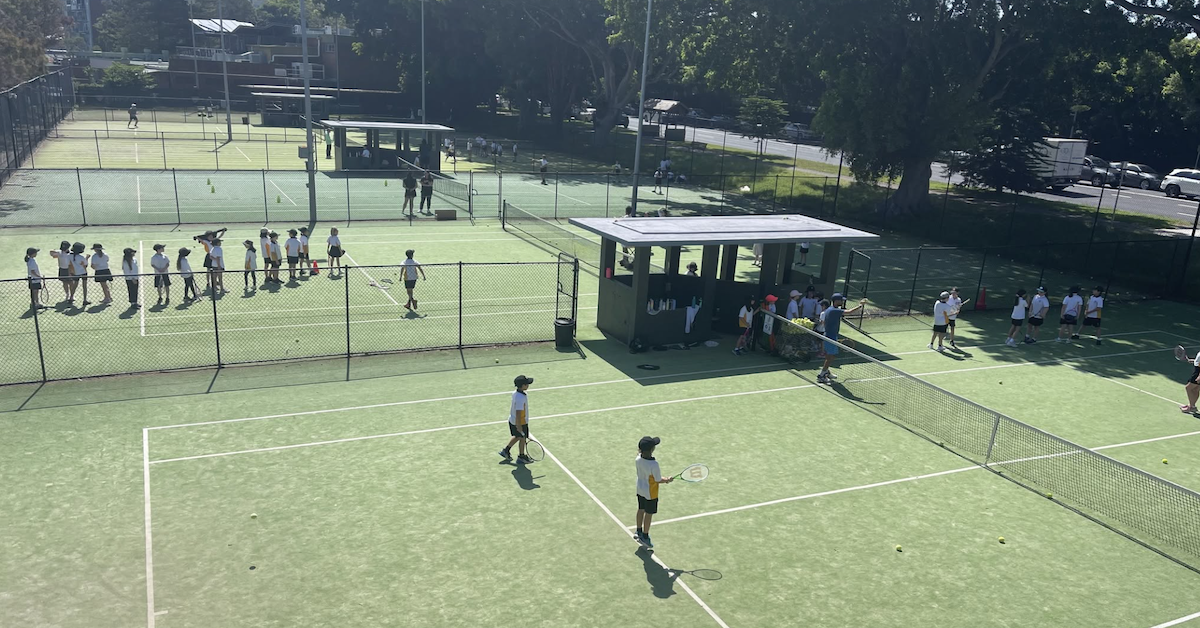
For many Rose Bay residents, Lyne Park Tennis Centre has been a staple of daily life for generations, hosting coaching programs, social competitions, and school holiday camps. General manager Anthony Bennett has worked there for 32 years, and many locals who learned to play under his guidance now enroll their own children.

Supporters argue the centre’s value extends beyond sport, serving as a foundational space for lifelong friendships. The level of local passion became clear after news of the tender recommendation emerged, when an online petition garnered more than 2,000 signatures in just 24 hours.

Considering a New Operator

The controversy stems from a formal tender process where Council staff assessed competing submissions to balance community sentiment with fiscal responsibility. 

According to council documents, Tennis Nation secured the staff’s recommendation by proposing a substantial $2-million investment in facility improvements, alongside a rental structure guaranteeing higher revenue for Woollahra over time. 

While the council’s finance committee endorsed the infrastructure upgrades and financial returns, a final decision remains subject to approval by the full council.
Pickleball Emerges as a Key Point of Difference

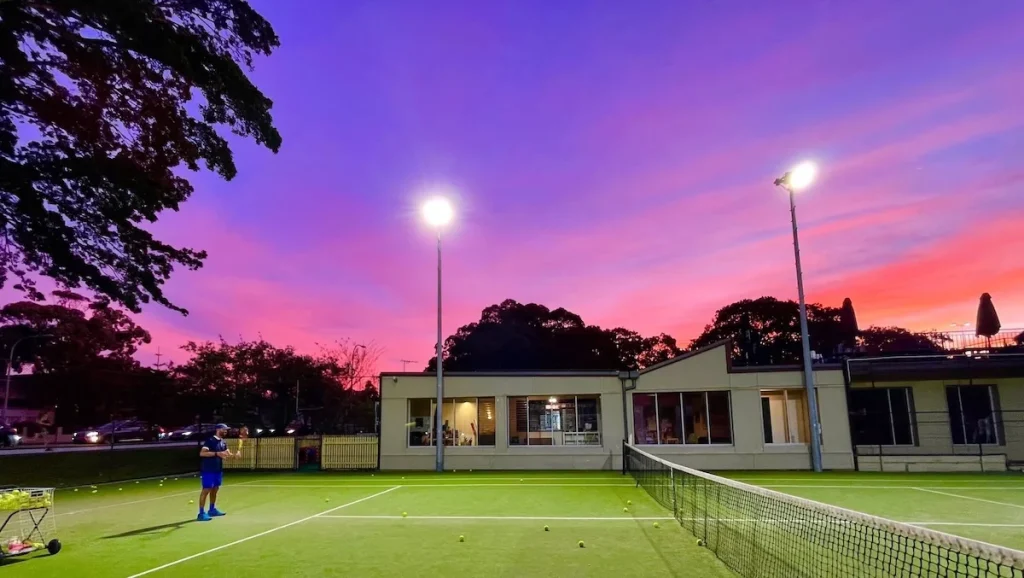
One of the most contentious aspects of the proposal involves pickleball, a rapidly growing racquet sport. Tennis Nation plans to create additional pickleball facilities at Lyne Park by adding line markings to two of the six existing tennis courts and converting an unused toilet block into a dedicated pickleball space.

Because pickleball courts require less space than traditional tennis courts, the shift allows operators to maximise participation and revenue. However, traditional tennis players are deeply concerned about losing court availability.

Supporters of the current management argue that demand for tennis in Sydney’s eastern suburbs already exceeds available infrastructure. They contend that shrinking tennis capacity will price out or crowd out players seeking lessons, competitions, and casual court bookings. 

The clash mirrors wider disputes across Sydney, where councils struggle to accommodate the growing popularity of pickleball while maintaining facilities for traditional racquet sports.

Community Connections Versus Commercial Opportunity

Ultimately, the standoff highlights two competing views of public asset management: prioritising longstanding local relationships versus maximising commercial capability.

Supporters maintain that local knowledge, established coaching relationships, and community trust are irreplaceable, regardless of financial projections. Conversely, the council’s tender process is bound to prioritise concrete operational capability, facility improvements, and financial return.


The finance committee’s recommendation must still proceed through the council’s decision-making process before a final outcome is reached.

Published 15-June-2026
Club Rose Bay Installs 4-Metre Noise Wall Amidst Community Concerns


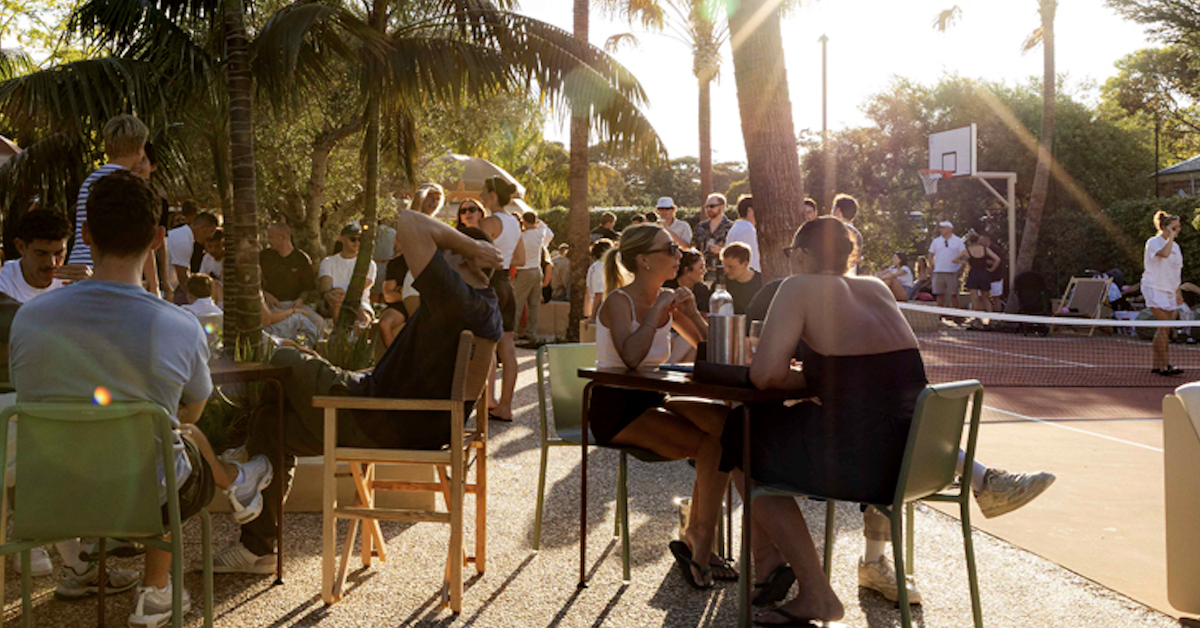
Club Rose Bay has built a 4-metre-high noise control wall around part of its outdoor area, as the revived Rose Bay venue tries to respond to community concerns about sound from late-night crowds, pickleball and basketball in the former car park space.

A Local Venue Back in Use

The former Rose Bay RSL reopened late 2025 after a major refurbishment led by Merivale. The club had served veterans and local residents for decades, and its return was seen by many as a chance to restore activity to an important local meeting place after financial strain and voluntary administration.

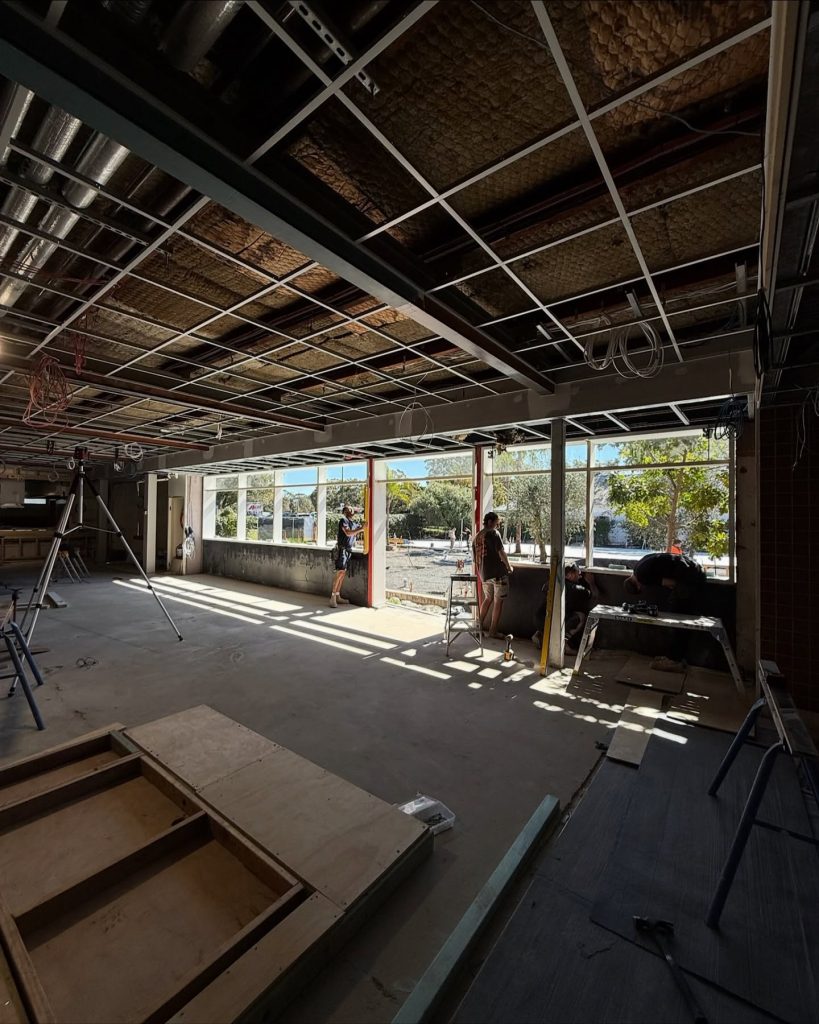
Renovation in 2025
Photo Credit: Club Rose Bay/Facebook

The redevelopment brought new kitchens, redesigned indoor spaces and an upgraded sports bar. Outside, the former car park was turned into a large open-air area with dining tables, drinking spaces, a full-size pickleball court, a half basketball court and an Airstream bar. The outdoor section quickly became one of the venue’s main drawcards.

Noise Becomes the Main Issue

As crowds grew, so did concern from people living nearby. Residents complained about the sound of pickleballs and basketballs carrying into the evening, along with noise from patrons using the outdoor area. Some complaints referred to activity stretching close to midnight, while police were also called to alcohol-related incidents.

The noise wall indicates that the venue aims to reduce the impact on nearby homes. Made of sound-control panels, it lines part of the outdoor area involved in the dispute.

Planning Questions Still Unresolved

While the wall addresses one part of the problem, it does not settle the planning dispute around the outdoor area.

Woollahra Council has stated that the space requires development consent before it can be used for outdoor dining and drinking. Council became aware in November 2025 that the venue planned to use the area without first obtaining that approval.

The club believed that the space could operate under an exemption in NSW planning rules but Council disagreed and later issued a formal notice requiring the venue to stop using the area for outdoor dining and drinking. The warning period expired in early February, leaving the matter open to further compliance action.

Complications and Debates

This has kept the outdoor section in a state of uncertainty. The venue continues to attract attention and trade, but the long-term future of that part of the site remains under review.

One reason the issue has become more complex is the status of the land itself. Reports have said the disputed area is on Crown land, which means the process does not sit neatly within a normal planning pathway.

Merivale has argued that this changes how approval should be handled, while Council has continued to push its own position.

With no final resolution yet announced, the venue has remained caught between community concern, pressure, and a wider review of how the site should be managed. Liquor authorities are reviewing complaints linked to the venue, adding another layer of pressure. This will have implications on the decision about the outdoor area, as it could also affect licensing issues.

The new noise wall may help ease some of the frustration felt by nearby residents, but it does not remove the larger questions hanging over the club.

Published 8-April-2026

Rose Bay Residents Confused by Push for High-Density Housing

A push to reshape Rose Bay into a high-density housing hub has sparked frustration and confusion among locals, who say their village lacks the transport and shopping infrastructure needed to support such growth.


The concerns boiled over during a packed community forum held at Double Bay Bowling Club on Thursday, 12 June, where more than 180 residents gathered to question why Rose Bay was identified as a “town centre” under the NSW Low and Mid-Rise Housing Policy.

A Village, Not a Centre

The plan aims to address the housing crisis by allowing more low- to mid-rise apartment buildings near existing infrastructure and public transport. Suburbs like Rose Bay, located less than 10 kilometres from Sydney’s CBD, have been flagged for such development.

However, residents and local leaders argue that Rose Bay does not meet the criteria of a town centre. Woollahra Mayor Sarah Swan stated that the suburb lacks a full-scale supermarket and adequate transportation links. Although the area has a Metro store and some grocers, she argued that it falls short of the planning standards that would justify its classification.

Wolloahra has lodged multiple Freedom of Information requests to understand how Rose Bay was chosen, but Ms Swan said the documents provided so far have been incomplete and vague.

Questions with Few Answers

At the forum, state MP for Vaucluse Kellie Sloane told the crowd she was also struggling to get clear answers from the Department of Planning. She noted that while officials appear to listen, there has been little sign of actual change or reconsideration.

Ms Swan said her own requests to meet with Housing Minister Paul Scully have been ignored. Council’s general manager did meet with him last year, but Swan said further efforts had gone unanswered.

Meanwhile, the Department of Planning maintains that Rose Bay is a suitable area for growth, citing its proximity to the city and existing services, including “three supermarkets, a Bunnings and good transport links.”

Property Boom or Community Bust?

The policy has already begun to shift the local property market. According to recent reports, some Rose Bay property owners have seen land values soar, with multi-lot sales potentially reaching hundreds of millions of dollars. One group of 16 homeowners on Wilberforce Avenue is reportedly considering a joint sale that could exceed $160 million.

While this has created financial opportunities for some, others fear it will make Rose Bay even less affordable. Forum attendees expressed concern that the increase in apartment stock would not benefit first-time buyers or downsizing retirees, but instead lead to inflated prices that push locals out.

Residents also raised questions about the impact on roads, schools, stormwater systems and tree cover, all of which they say are already stretched.

Locals argue they are not against growth, but want development that fits the scale and character of the area. The call from residents and officials is not for a halt to housing reform, but for greater transparency and planning tailored to community needs.


Council has lodged a second FOI request and says it will continue to pursue all avenues, including legal review, if answers aren’t forthcoming.

Published 20-June-2025

Division in Rose Bay: When a Bus Shelter Stirs a Community

It started as a bus stop, nothing more, nothing less. But in Rose Bay, that bus stop has become a symbol of something much bigger. On the edge of New South Head Road, outside a local nail salon, a new shelter with a towering advertising screen now stands, and some residents say it’s changed everything.


The shelter was one of nearly 40 that began appearing across Woollahra’s eastern suburbs in 2024. Brought in through a deal between Council and advertising company oOh! Media, the structures came with seats, shelter from the rain, and large screens meant to bring in extra revenue. The goal was to upgrade public transport infrastructure while reducing financial strain on ratepayers.

But in Rose Bay, the change wasn’t welcomed by all.

One Shelter, Many Problems

For some locals, the shelters offered practical benefits. Seniors, they said, had a place to rest while waiting for the 323. On rainy days, children could stay dry before school. The revenue was a bonus. It was a way for Council to fund local services without raising rates.

For others, though, the trade-off wasn’t worth it. 

Deanna Mastellone, who has lived in Rose Bay for years, couldn’t look past what she described as a growing “blight” on the suburb’s character. In her view, the shelters were too big, too bold, and too intrusive. 

The advertising screen outside the nail salon near her home struck a nerve. In her latest Facebook post, published on 14 June, she wrote that the structure “must be completely and permanently removed.” She claimed the screen devalued the property and made it nearly impossible for the business owner to sell. What was once a clean stretch of promenade, she argued, now felt cluttered.

“I’m not against bus shelters,” she explained. “We need them. But they must not destroy our beautiful streetscape.” 

She called on Woollahra Council to engage with the full community before moving forward with such installations and urged a return to simpler, heritage-style seating.

“It is an absolute disgrace Woollahra Council has signed up for 39 advertising bus shelters with zero community consultation. They placed a giant advertising screen at the O’Sullivan Road bus stop Rose Bay. Such an ugly blight on our magnificent Rose Bay Promenade. Balmoral Beach does not have any of these giant bus shelter advertising screens. Mosman Council only has 22, and engaged with the entire community, plus accommodated all objections. I never give up nor go away. Wrong is wrong. Have followed up with the Audit, Risk and Innovation external Woollahra Council commitee. We must protect and preserve our streetscape and ensure all the community is engaged in the placement of these bus shelters. I am not against bus shelters. We have the privilege to live in the most beautiful harbour side city in the world and it is all our responsibility to protect and preserve its beauty,” Ms Mastellone wrote.

Frustrations Build

Mastellone wasn’t alone. In February 2025, resident Nancy Georges launched a petition asking Council to stop installing shelters that narrowed already tight footpaths. She raised concerns about pedestrian safety and pointed to three reported car accidents that had taken place near the shelter outside Star Nails.

Business owners joined in. Some said the shelters made it harder for customers to see their storefronts. Others complained that people were being forced off the curb and onto the road, especially near high-traffic intersections. 

giant advertising screen in Rose Bay
Photo Credit: Deanna Mastellone/Facebook

Still, Council stood by its decision. The representatives stated that each shelter site was carefully assessed and that nearby homes and shops were notified in advance. They argued that the advertising revenue helped fund essential services, including street cleaning and public amenities. Removing the shelters now, they said, could ultimately cost the community more.

No Easy Answers

By March 2025, tensions were high enough to draw media attention amidst Mastellone’s protest, where she chained herself outside her home in symbolic opposition. Residents from surrounding suburbs chimed in online. Some supported the changes. Others said the shelters belonged somewhere else—anywhere but Rose Bay.


As of June 2025, the NSW Ombudsman continues to review formal complaints filed by residents. Woollahra Council has said it may reconsider some shelter placements, but has made no firm commitment to remove any of them.

Published 20-June-2025

Rose Bay Uniting Church and Wesley Hall Redevelopment Upheld Pending Heritage Listing Proposal Determination

Plans to redevelop Rose Bay Uniting Church and Wesley Hall into a mixed residential and commercial site have been sustained by the Woollahra Council.

As of Friday, the 31st of May 2019, the status of the development application, which was filed more than a year ago, has been changed to “Upheld” after the Council’s initial rejection last July 2018.  

Uniting Church In Australia Property through its developer Endeavour Property Advisory submitted an amended development proposal in January 2019 following protests from Rose Bay locals last year.

Residents were opposed to the redevelopment as the said buildings have become an integral part of Rose Bay and Sydney’s history and progress.


Rose Bay Uniting Church stood on 518A Old South Head Road corner Dover Road since 1904. Twenty years later, the property was expanded with the construction of Wesley Hall.

Both sites reflected the earliest communities that existed in Rose Bay. Wesley Hall, in particular,  was a popular venue for school activities, ballet classes, and other family and community events over the decades.   


A few years ago, however, Uniting Church of Australia Property approached developers for help in repurposing the buildings, especially Wesley Hall. The original plan entailed a drastic change that would only retain 10 per cent of the buildings’ original structure.

Some residents came together to push for the preservation of Rose Bay Uniting Church and Wesley Hall. Thus, Woollahra Council also exhibited a proposal to add these buildings in the Heritage Listing, which would prevent and protect its demolition or major changes.

Photo Credit: Rose Bay Residents Association/Facebook

The public exhibition on its heritage listing application took place from Wednesday, the 10th of April to Friday, the 10th of May 2019. A decision from the Land and Environment Court, however, has not yet been made.