
Future of Lyne Park Tennis Centre Sparks Strong Community Response in Rose Bay

A proposal to place Lyne Park Tennis Centre under new management has sparked a heated debate across Rose Bay, with thousands of residents backing the longtime local operator while Woollahra officials move towards awarding the lease to a larger multi-venue company.


The future of the popular waterfront facility came into focus in early June after Woollahra’s finance committee recommended accepting a tender from Tennis Nation, which operates multiple sites across Sydney. The recommendation would replace the current management team, which has run the centre for more than three decades, sparking immediate backlash from players, families, and community members who view the venue as a vital social hub.

A Tennis Centre That Has Served Generations

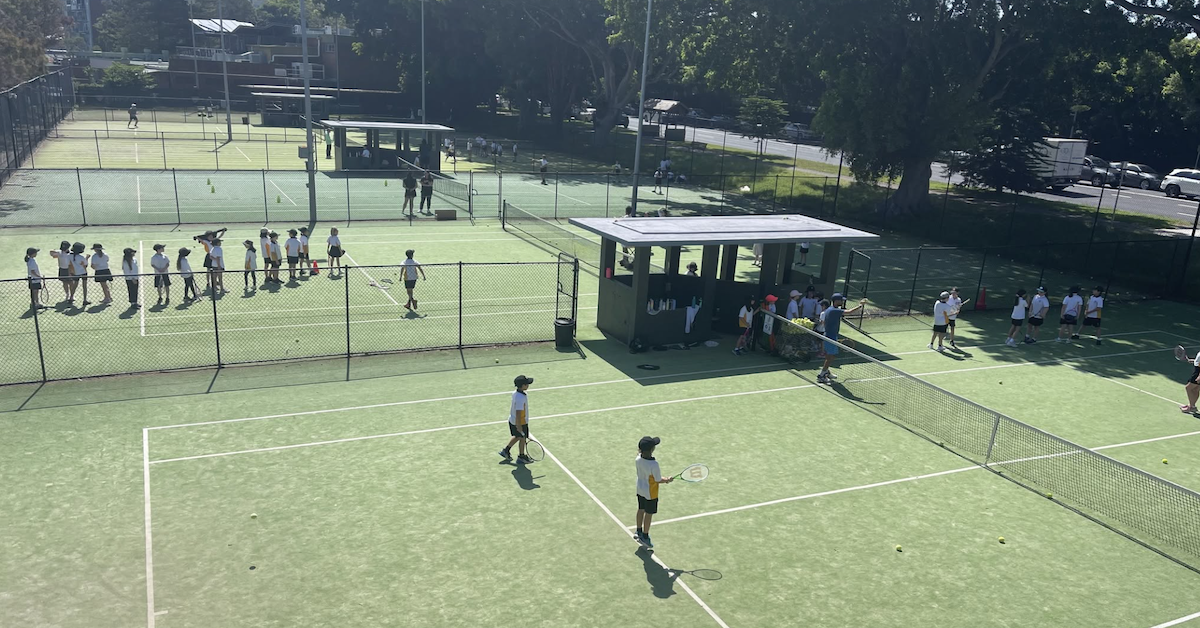
For many Rose Bay residents, Lyne Park Tennis Centre has been a staple of daily life for generations, hosting coaching programs, social competitions, and school holiday camps. General manager Anthony Bennett has worked there for 32 years, and many locals who learned to play under his guidance now enroll their own children.

Supporters argue the centre’s value extends beyond sport, serving as a foundational space for lifelong friendships. The level of local passion became clear after news of the tender recommendation emerged, when an online petition garnered more than 2,000 signatures in just 24 hours.

Considering a New Operator

The controversy stems from a formal tender process where Council staff assessed competing submissions to balance community sentiment with fiscal responsibility. 

According to council documents, Tennis Nation secured the staff’s recommendation by proposing a substantial $2-million investment in facility improvements, alongside a rental structure guaranteeing higher revenue for Woollahra over time. 

While the council’s finance committee endorsed the infrastructure upgrades and financial returns, a final decision remains subject to approval by the full council.
Pickleball Emerges as a Key Point of Difference

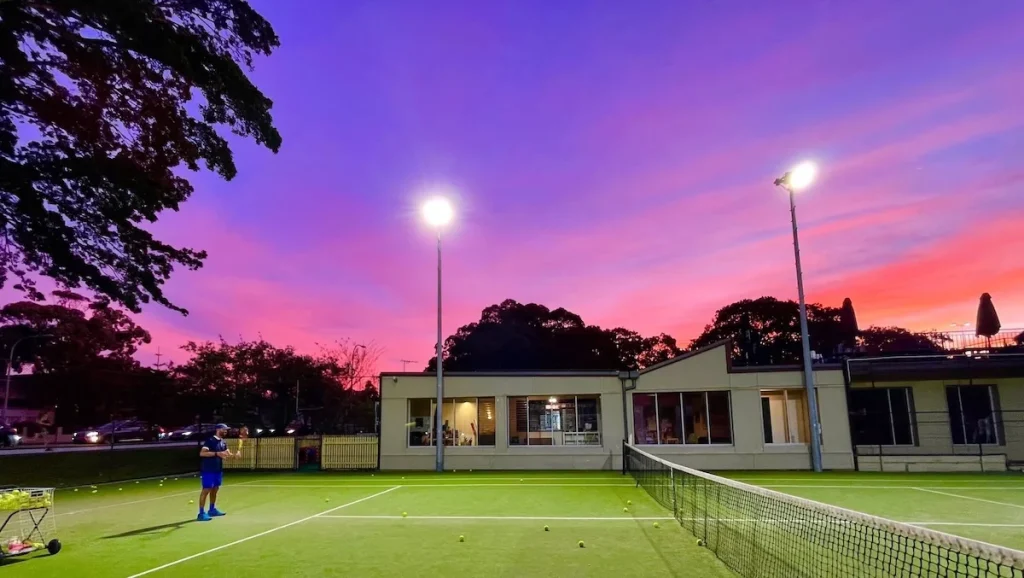
One of the most contentious aspects of the proposal involves pickleball, a rapidly growing racquet sport. Tennis Nation plans to create additional pickleball facilities at Lyne Park by adding line markings to two of the six existing tennis courts and converting an unused toilet block into a dedicated pickleball space.

Because pickleball courts require less space than traditional tennis courts, the shift allows operators to maximise participation and revenue. However, traditional tennis players are deeply concerned about losing court availability.

Supporters of the current management argue that demand for tennis in Sydney’s eastern suburbs already exceeds available infrastructure. They contend that shrinking tennis capacity will price out or crowd out players seeking lessons, competitions, and casual court bookings. 

The clash mirrors wider disputes across Sydney, where councils struggle to accommodate the growing popularity of pickleball while maintaining facilities for traditional racquet sports.

Community Connections Versus Commercial Opportunity

Ultimately, the standoff highlights two competing views of public asset management: prioritising longstanding local relationships versus maximising commercial capability.

Supporters maintain that local knowledge, established coaching relationships, and community trust are irreplaceable, regardless of financial projections. Conversely, the council’s tender process is bound to prioritise concrete operational capability, facility improvements, and financial return.


The finance committee’s recommendation must still proceed through the council’s decision-making process before a final outcome is reached.

Published 15-June-2026

Anzac Unease Grows in Rose Bay as Veterans Question Club Revamp


Club Rose Bay was once relied on by veterans and older locals for a drink, a catch-up and Anzac commemorations, but it has become the centre of disagreement within the community, with long-time members saying the revamped venue no longer feels built for the people it was meant to serve. 


The dispute has flared in the lead-up to Anzac Day, when Rose Bay’s RSL sub-Branch is preparing its annual service and community gathering. On its own public schedule, the sub-Branch lists an ANZAC Sunday Service for April 19, 2026, while Merivale is promoting Anzac Day trading and two-up at Club Rose Bay on April 25. 

Photo Credit: Merivale/Club Rose Bay

The overlap has sharpened a local question: can the new-look venue still meet the expectations many veterans and older members have of an RSL at the most important time of the year? 

Rose Bay’s Anzac Focus Meets a New Club Identity

Club Rose Bay was brought back from administration after members voted 147 to one in January 2025 to proceed with a Merivale management deal. Reports at the time described the club as being under major financial strain, with the site having closed in 2024 before the rescue package was backed by members. The vote gave Merivale, led by Justin Hemmes, control of food and beverage operations, while the club itself continued as a registered club. 

Since then, the venue has been repositioned as Club Rose Bay and reopened after a year-long refurbishment in December 2025. Merivale and design coverage around the reopening described a broad remake of the site, presenting it as a renewed local destination with hospitality, outdoor trading and updated social spaces. Lifestyle coverage also cast the project as the venue’s biggest refresh in decades. 

This fresh start has not landed the same way with everyone. The central complaint from critics is not simply that the club looks different, but that its role in community life has shifted. Veterans and older members argued the atmosphere now feels more suited to younger patrons arriving for food, drinks and entertainment than to ex-service people wanting the familiar club culture associated with an RSL, especially ahead of Anzac Day. 

A Club Saved for Some, But Harder to Use for Others

The strongest concern is practical as much as symbolic. The loss of the car park and the move toward a busier outdoor venue had made the site harder for older patrons to use. Old-time patrons pointed to parking pressure, access issues and long waits for service as signs the club’s daily rhythm had changed. 

For older veterans, it’s more than just comfort. Rose Bay RSL describes its Anzac service as one of the most significant events organized by the sub-Branch each year. This means that concerns about queues, noise, access, and crowd mix are not just practical issues. These concerns reflect a belief that a place linked to service and memory is changing too quickly for them to keep up with.

Supporters of the revamp make a different case. Their argument begins with the fact that the club was in serious trouble before the Merivale deal. Seen through that lens, the new Club Rose Bay is not a takeover of a healthy institution but an attempt to stop one from failing. 

The debate around Club Rose Bay is no longer just about outdoor trading, crowd noise or planning rules. At the centre of that divide is a simple question: who is the club really for? 


Published 16-April-2026

$150-million Rose Bay Sale Marks a Turning Point for Sydney’s East

An amalgamated Rose Bay site has changed hands in a deal worth about $150 million, in what Raine & Horne describes as one of Australia’s biggest residential property transactions. 


The sale, negotiated by Raine & Horne’s Double Bay office, combines multiple neighbouring properties in Rose Bay and could significantly change how this part of the suburb is used in future.

A major deal for the eastern suburbs

The landmark site, spanning about 3,000 square metres across 33–37 Dover Road and 2–30 Wilberforce Avenue, includes five houses and two unit blocks. The site’s zoning allows for a six-storey building with a 22-metre height limit, making it a significant redevelopment opportunity in Sydney’s eastern suburbs.

The deal was led by agent Alex Lyons and his team at Raine & Horne Double Bay, who handled the sale of the amalgamated Rose Bay site. The buyer has not been officially confirmed, but industry sources allege it is Graeme Skerritt, owner of Pathways Aged Care, and that he is reportedly planning a luxury aged-care facility on the 3,000-square-metre site.

What this means for the Rose Bay community

For Rose Bay residents, the sale is about more than the headline price, as it is likely to influence how this pocket of the suburb is redeveloped. The site sits within Rose Bay’s harbourside area, which is known for its village-style shopping strips, nearby schools and proximity to the CBD. 

Any future plans for the block are expected to draw close attention from local residents, given the size and location of the property.


High-value sites with flexible planning potential are typically sought after in lifestyle-rich suburbs like Rose Bay, and this transaction appears to fit that pattern. Agents say the sale reflects strong demand for prestige landholdings in Sydney’s east, even as the broader housing market moves through different cycles.

Published 4-Nov-2025